
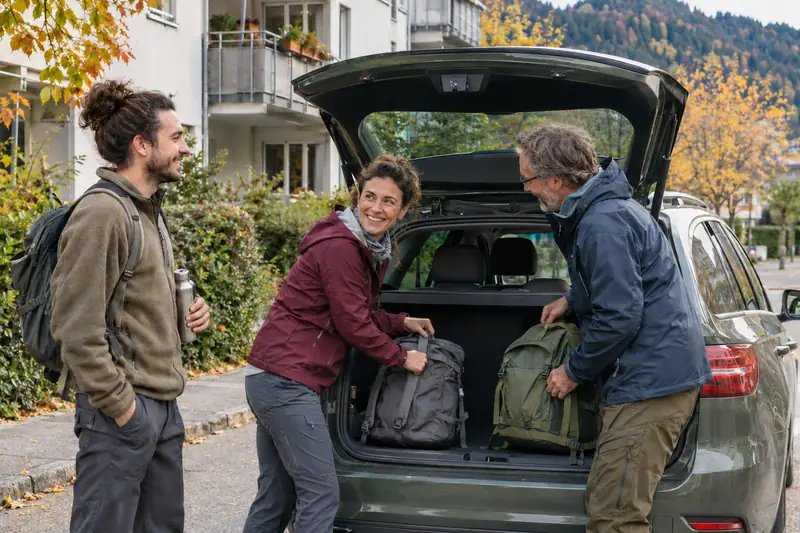
Camper van sharing between individuals is an arrangement in which a private owner rents out a camper van or motorhome to travellers for a fee, usually through an online platform that handles booking, payment and cover. It lets owners recover part of the high cost of a vehicle used only a few weeks a year, and it lets holidaymakers travel without buying one. Careful checks of the vehicle, the insurance and the handover protect both sides, whether the trip is a long weekend at the coast or a month on the road.
Why camper vans are widely shared
A camper van is one of the most underused vehicles. Many owners use it for a few weeks each summer and some weekends, yet pay for insurance, storage, servicing and depreciation all year round. Renting it to other travellers brings back a part of that cost.
For borrowers, the appeal is variety and price. Private owners offer older vans, converted vehicles and compact models that traditional agencies do not stock, often at lower prices and with a more personal welcome. A first-time traveller can test van life before a major purchase.
Demand follows the seasons, with peaks in summer, school holidays and long weekends, and a quieter period in winter. Owners who adapt their calendar and prices to these cycles earn more and avoid empty weeks.
Camper van sharing between individuals and the licence
Check the weight of the vehicle. Many camper vans are under three and a half tonnes and can be driven with a standard car licence in many countries, but larger motorhomes may require a different category. The maximum permitted mass appears on the registration document.
Some owners require a minimum number of years of driving, and some ask for an additional deposit for inexperienced drivers. Foreign visitors should check whether their licence is accepted and whether an international permit is needed.
- Ask for the dimensions: length, width and height.
- Practise reversing and turning in an empty car park.
- Learn the height before entering a car park or going under a bridge.
A camper van is bigger than it feels, and mirrors and blind spots require more attention than in a car.
Insurance and the platform contract
The insurance of a leisure vehicle differs from that of a car. Owners should tell their insurer that the camper will be rented, and check that the policy accepts paid hire. Platforms generally provide cover for each booking, with an excess that is often higher than for a car because the vehicle is more expensive.
Read the contract. It should state what is covered, such as collision, theft, fire and glass; what is excluded, for example damage to the awning, the interior fittings or the roof; and the delay to declare an incident. Check also whether driving abroad is allowed and which countries are covered.
Ask about assistance. A breakdown with a large vehicle can be complicated, and good cover includes towing, repair and a place to stay if the camper cannot be used. Keep the phone numbers in the van and on your phone.
Handover: the checks that matter
The handover should be longer than for a car. The owner shows how the vehicle works, including the engine, the gas system, the water tanks, the electricity, the heating and the toilet. Take notes or record a short video.
- Inspect the bodywork, tyres, windows, roof and awning, and photograph any damage.
- Check the fuel, gas bottle and water levels, and the state of the battery.
- Test the lights, the fridge, the hob and the heating.
- Count the equipment: chairs, table, cables, hoses, gas regulator.
- Note the mileage and any hours of generator use.
Write down the agreed return time, the cleaning conditions and the places where the vehicle must be emptied. Give the owner a contact number and keep theirs close for emergencies.
Prices, deposits and extras
Prices depend on the model, the season and the length of rental. Owners usually set a nightly rate with a minimum number of nights during high season and offer a lower price for longer stays. Extra costs may include a mileage fee beyond an allowance, cleaning, bedding, a set of kitchenware and a generator.
A deposit, often several hundred units, is blocked or paid in advance and returned after checks. Ask how and when it is released and what may be deducted.
Compare the total with that of an agency, including insurance and extras. Remember the other costs of the trip: fuel, campsite fees, tolls, gas and food. A camper van uses more fuel than a car, and a trip across the country can cost much more than the nightly rate suggests.
Life on the road: rules and courtesy
Camping rules vary by country, region and municipality. Overnight parking in a camper van is allowed in some places and forbidden in others. Use official campsites, motorhome areas or private farms when in doubt, and respect signs and local laws. Wild camping is prohibited in many places.
Empty waste water and toilets only at the proper points, and never in nature. Keep the vehicle tidy and avoid noise at night. If you share a space with others, remember that visitors depend on the goodwill of locals.
Check the weather, since high wind, heavy rain or frost can affect safety and comfort. Know how to switch off gas appliances when driving, and never use a barbecue or a heater inside the vehicle without proper ventilation. Carbon monoxide is a real danger.
Returning the vehicle and closing the booking
Return the camper on time, with the fuel level agreed and the tanks emptied. Clean the interior, wipe the surfaces and remove rubbish, sand and food. Wash bedding if the contract asks for it. Charge the battery if you used it heavily.
At the meeting, inspect the vehicle again with the owner. Compare the photographs and note any new marks. Declare any damage you know about, and agree on the next steps. Honest communication is much better than a surprise discovered after you have left.
When the deposit is released, leave a review. Good reviews help future borrowers and encourage owners. Owners should record the income and costs of each rental, because the tax treatment of such income depends on the amounts and the regularity, and it is wise to check the rules with an adviser.
Planning a first trip
A first trip in a borrowed camper deserves modest ambitions. Choose a route with short driving days, campsites booked in advance and places to stop that are easy to reach with a large vehicle. Plan for roughly three hours of driving a day, which leaves time to enjoy the destination and to settle in before dark.
Make a list of what to bring: bedding if it is not supplied, towels, cooking equipment, a torch, a first-aid kit and a map in case the satellite navigation fails. Check whether the van has a sat-nav suitable for tall vehicles, and enter the height before departure.
Plan fuel stops, water refills and waste disposal points. In summer, book popular campsites early, and in winter, check which sites remain open. Tell a friend or relative where you plan to be, and keep in touch.