
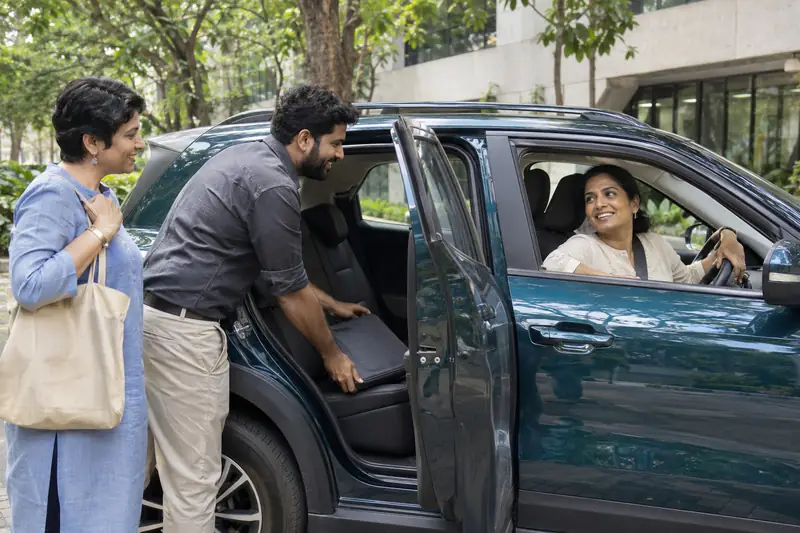
In India, carpooling is the sharing of a private car journey so that the driver and one or more passengers travelling the same way divide the cost of fuel and tolls. It is mainly used for the daily commute in large cities such as Bengaluru, Delhi, Mumbai, Hyderabad and Pune, and for some intercity journeys. Rides are organised through apps, workplace groups and neighbourhood networks. Because traffic congestion is severe and parking is limited, sharing a vehicle can save money and time, but the legal position needs careful attention.
Carpooling in India: why congestion drives interest
Indian metropolitan areas have some of the busiest roads in the world. Journeys of ten or fifteen kilometres can take over an hour at peak times, and many offices are located in technology parks or business districts that are far from residential areas. Most of the cars seen on the road carry only the driver, so sharing could reduce both traffic and costs.
Employees of large companies are the main users. Colleagues who live in the same area share a car to a campus or a tech park, and some employers organise shuttle services as a complement. Residents of housing societies also form groups to travel to the same office district.
Despite the potential, carpooling has grown more slowly than ride-hailing, partly because of habits, concerns about safety and uncertainty over regulation.
How apps and groups organise rides
Several Indian apps connect people who make the same trip, and some international platforms have also operated in the country. Typically, you enter your start and end points and the times, and the app suggests matches. Corporate programmes can restrict matching to employees of the same company, which many users find more reassuring.
Housing societies and offices often use messaging groups, which are simple but less structured. A coordinator can keep track of seats, days and contributions. For intercity trips, such as Bengaluru to Chennai or Mumbai to Pune, platforms and social groups list available seats.
- Verify the person's identity and employer where possible.
- Share your ride details with family.
- Confirm the pick-up point and time in advance.
- Agree on the contribution before the trip starts.
Sharing costs: fuel, tolls and parking
The costs of a typical journey are fuel, electronic tolls on expressways and highways, parking at the destination and wear on the vehicle. Many Indian highways use an electronic tag system for toll payment, so the driver pays automatically and later settles with passengers. Parking in business districts can be a notable cost, and it is sensible to include it in the calculation if the driver pays for it.
A common approach is to estimate the cost per kilometre and multiply it by the distance, then divide by the number of occupants. Some groups use a monthly fixed amount, while others rotate the use of cars so that no money changes hands.
The aim is cost sharing, not profit. Keep a simple record of expenses so that everyone understands how the amount was calculated.
The legal position in India
The law distinguishes between private vehicles, which carry white or similar plates, and commercial vehicles, which need permits for carrying passengers for hire. Authorities in some states have taken action against drivers who use private cars for paid rides, and carpooling has been debated in relation to the Motor Vehicles Act. National guidelines on aggregators have recognised carpooling in some form, with limits to avoid profit-making.
Rules and enforcement vary from one state to another and may change. Drivers who share costs on an occasional or regular basis should check the state transport department's position, and avoid advertising their rides as a commercial service. Passengers should also ask whether the driver's insurance covers them.
The safest approach is to stay within a clear cost-sharing arrangement, avoid fixed profit, and follow any rules published by the local authorities.
Insurance and safety
Standard motor policies in India cover third-party liability and, depending on the policy, own damage. Ask your insurer whether passengers who share costs are covered, and keep the documents in the car: registration certificate, insurance, pollution certificate and licence.
Personal safety is a frequent concern, especially for women. Prefer corporate or verified programmes, travel with colleagues or known people, and share live location with family during the trip. Meet in a public place and note the vehicle number before entering.
- Wear seat belts on every seat.
- Avoid driving when tired or after dark on unfamiliar roads.
- Respect speed limits on highways and expressways.
- Report problems to the app or the employer.
Drivers should maintain their vehicle properly and avoid using phones while driving.
Intercity and festival travel
Long-distance carpooling is shaped by the scale of the country. Typical corridors include Delhi to Jaipur, Mumbai to Pune, Bengaluru to Mysuru and Hyderabad to Vijayawada, and demand rises during festivals such as Diwali, Holi and Eid, when millions travel home. Trains and buses are crowded at those times, and tickets can be hard to get.
A shared car offers more flexibility, but road conditions, fog in winter in the north and heavy rain in monsoon season affect travel time. Plan breaks, especially on highways with few service points, and avoid late-night driving when possible.
Agree the route and the schedule with the driver in advance, including how stops, luggage and tolls will be handled. A clear understanding reduces conflict and makes the trip pleasant for everybody.
Employers, tech parks and housing societies
Workplace programmes are a major driver of carpooling in India. Employers may provide priority parking, rewards or technology to match staff, and some use their own apps. Tech parks sometimes coordinate with local authorities for pick-up points and designated parking areas.
Housing societies can also help, by providing a notice board, a group chat or a space for a meeting point at the gate. Neighbours often know each other, which makes it easier to build trust. A simple weekly rotation, with each person driving on assigned days, requires no payments and is easy to manage.
If you want to start a group, begin with two or three colleagues, agree on rules about timing, waiting and payments, and gradually expand. Informal groups with clear rules are usually more stable than large ones.
Practical tips for newcomers
Try a short, planned trip first. Check the reviews or ask colleagues for their experience before using a new service. Keep the amount of personal information you share to a minimum, and use the in-app messaging system until you trust the other person.
Carry some cash for tolls or parking and a phone charger. Allow extra time during the monsoon, when roads may flood, and during festivals, when traffic patterns change. Be polite with timings and settle payments promptly.
Finally, keep an alternative, such as a metro line, a suburban train or a bus, for days when the carpool falls through. Mixed travel is common in Indian cities, and a well-planned combination of shared car and public transport can make a long commute more manageable and less costly.
Carpooling organisations in India
- QuickRide : Indian carpooling and ride-sharing platform that matches commuters travelling the same route, including corporate programmes.
- BlaBlaCar India : Intercity ride-sharing platform where drivers share seats and costs with passengers travelling between Indian cities.
- Poolcircle : Indian carpooling application that connects office-goers and neighbours for shared daily travel.
Further reading
- Ministry of Road Transport and Highways : Government source for motor vehicle rules, road safety and transport policy in India.