
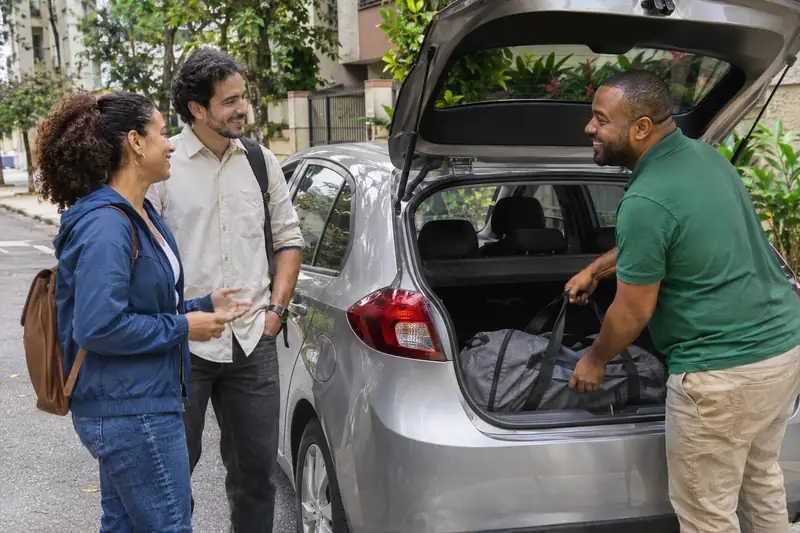
In Brazil, carpooling means a driver who is already making a journey by car offers the empty seats to passengers heading the same way, and they contribute to fuel and toll costs instead of paying a fare. Known locally as carona, the practice covers long intercity trips, daily commutes in large metropolitan areas and student journeys to universities. It differs from ride-hailing because the driver travels for their own purpose and does not earn a living from the trip. Costs are shared, and the arrangement depends on trust, clear agreements and sensible safety habits.
Why carpooling in Brazil suits such long distances
Brazil is so large that a single journey between two state capitals can last a full day by road. In that setting, sharing a car turns an expensive trip into an affordable one, particularly when petrol, ethanol and highway tolls are added together. Many regular drivers who travel between a big city and their home town offer seats every weekend.
- Long routes such as São Paulo to Rio de Janeiro or Belo Horizonte to São Paulo are the classic carona corridors.
- Holiday periods, especially around Carnival and end-of-year festivities, create peaks of demand.
- Students use shared rides to reach campuses outside city centres.
Coach travel remains the dominant option, so a shared car competes mainly on flexibility and door-to-door convenience rather than on being the only choice.
Where to find a ride or offer seats
Most arrangements today start on an app or a web platform where drivers publish a route, a departure time and a price per seat. Passengers search by origin and destination, read the driver profile and request a place. Some university communities run their own closed networks, which many users find reassuring because everyone belongs to the same institution.
Informal channels still exist, such as workplace noticeboards, neighbourhood messaging groups and social media communities dedicated to a specific highway. These are free to join but offer fewer safeguards, so it makes sense to be more careful with identity checks. Whatever the channel, agree the meeting point, the luggage allowance and the payment method before the day of travel, and keep the conversation written so that both sides can refer back to it.
Sharing costs fairly: fuel, ethanol and tolls
The guiding principle is that the driver recovers a share of the real cost of the trip, not a profit. Because many Brazilian cars run on ethanol, petrol or a mixture of both, fuel cost per kilometre varies, so it helps to base the calculation on what the driver actually pays at the pump.
- Add fuel, tolls and, if relevant, parking at the destination.
- Divide the total by the number of occupants, including the driver.
- Round the figure to something simple and agree it in advance.
Highway tolls, known as pedágios, can be frequent on busy state roads, and they are often the largest surprise on a long trip. Stating clearly whether tolls are included in the seat price avoids awkward conversations at the first petrol station.
Safety, trust and good habits on the road
Travelling with someone you have never met calls for a few precautions that cost nothing. Check that the profile photo matches the person at the meeting point, confirm the car model and plate number, and tell a relative where you are going and who is driving. Women travelling alone often choose drivers with several positive reviews or select women-only communities where they exist.
Drivers should keep documents up to date, respect the zero-tolerance approach to drinking and driving that Brazilian law applies, and avoid driving when tired during very long night stretches. Passengers wear seat belts in every seat, including the rear, as the traffic code requires. A calm conversation about music, stops and punctuality at the start of the trip prevents most misunderstandings later.
Legal position of drivers and passengers
Carona is generally understood as a cost-sharing arrangement between private people, not a commercial transport service. Once a driver starts earning more than the cost of the trip, or advertises seats like a taxi, the activity moves closer to paid passenger transport, which is regulated differently and can attract fines. For that reason, reputable platforms limit the price a driver may ask.
- Keep the licence, vehicle registration and mandatory insurance current.
- Check with your own insurer how passengers are treated in case of an accident.
- Do not carry more people than the seats and belts available.
Rules can differ between states and municipalities, so for city-specific measures such as traffic restrictions based on number plates, consult the local transport authority before relying on carpool benefits.
Everyday commuting in São Paulo, Rio and other metropolitan areas
In large metropolitan regions, congestion is the daily argument for sharing a car. Colleagues who live in the same district often alternate vehicles during the week, which spreads the cost of fuel and parking and cuts the number of cars on the avenues. Companies located in business districts sometimes help employees organise such groups, because parking spaces are scarce and expensive.
A regular commuting pool works best with a written routine: fixed pick-up points, a tolerance of a few minutes for delays and a plan for days when someone needs to leave early. Rotating drivers keeps the burden fair, and a shared note of kilometres driven makes any monthly settlement easy. Remember that bus lanes and some traffic restrictions are not lifted merely because several people are in the car.
Carpooling at universities and student networks
Brazilian universities often sit far from residential areas, and many students do not own a car. Campus-based carpool initiatives connect those who drive with classmates living nearby, usually through a mobile application restricted to members of the institution. This keeps trips predictable and lets students build trust through a shared community.
- Rides are generally free or limited to a small contribution for fuel.
- Drivers and passengers confirm their university registration before the first journey.
- Evening classes make safe pick-up points particularly important.
Such networks show that carpooling in Brazil is not only about saving money; they also reduce parking pressure on campus and give newcomers a simple way to meet other students.
Practical checklist before your first shared trip
A short list prepared the day before removes most of the stress. Confirm the time, the exact meeting point and a phone number that works on the road. Pack light, because a full boot is the main reason a driver cancels, and bring small change for tolls if the driver asked you to cover them.
- Read the driver or passenger reviews and the number of completed trips.
- Agree on stops for food and rest on trips longer than four hours.
- Share your live route with a trusted person.
- Keep a payment method ready, preferably the one recommended by the platform.
After the journey, leave an honest review. Reviews are the currency of carpooling, and each one helps the next traveller choose with confidence.
Carpooling organisations and apps in Brazil
- BlaBlaCar Brasil : International long-distance carpooling platform with a Brazilian version where drivers publish intercity trips and passengers book seats.
- Caronaê : Carpooling initiative born at a federal university in Rio de Janeiro, designed to connect students and staff who travel to campus.
- Waze : Navigation community app known for real-time traffic data, used by many Brazilian drivers to plan shared routes.
Further reading
- ITDP Brasil : Non-profit organisation working on sustainable urban mobility and public transport in Brazilian cities.