
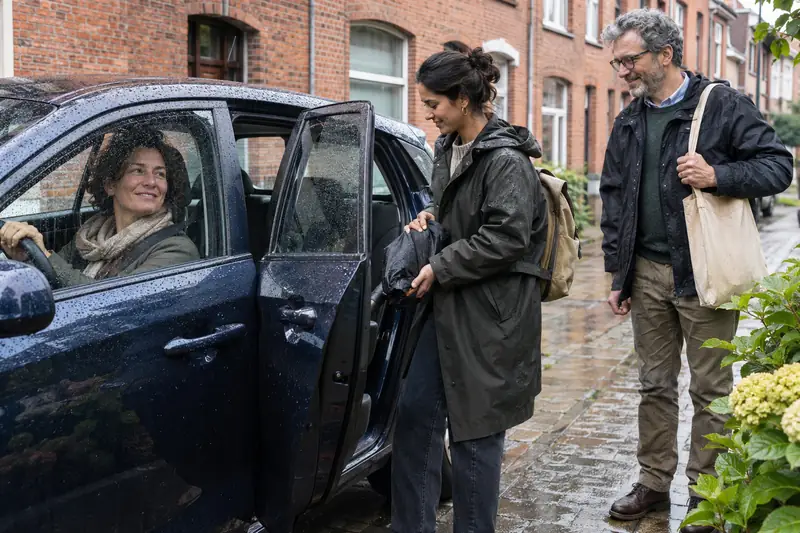
In Luxembourg, carpooling is the shared use of a private car by people who make the same regular journey, typically between home and a workplace in Luxembourg City or its business districts. The country relies heavily on cross-border workers who arrive each day from France, Belgium and Germany, which puts great pressure on motorways and parking. Employers, municipalities and national platforms therefore encourage pooling, and participants share fuel and parking costs while saving time, easing stress and reducing congestion on busy roads.
Why the grand duchy needs shared cars
Luxembourg is small, but its economy attracts a workforce far larger than its resident population. Every morning, a flow of commuters crosses the borders from Lorraine, Wallonia and the Saarland and Rhineland-Palatinate regions, and the motorways towards the capital, such as the A3, A4 and A6, are saturated at rush hour. Companies in the financial district of Kirchberg and in business parks at Cloche d'Or and Gasperich face constant demand for parking.
- Fewer cars means shorter queues at the entrances to the city.
- Employers save on parking spaces, which are expensive to build and maintain.
- Drivers share fuel and avoid wear on their own vehicle.
These factors make the country a natural place for structured carpooling programmes.
Carpooling in Luxembourg: platforms and employer schemes
A national carpooling platform backed by the ministry in charge of mobility lets employees register their route and working hours, then suggests compatible partners. Companies can sign up their staff and view the results of a scheme, which helps them plan parking and report on their commuting footprint.
Some employers go further, reserving the best parking spaces for cars with several occupants or offering internal matching events at the start of the year. Cross-border commuters can usually register with their home address, wherever it is, as long as the destination is in the grand duchy. Before choosing a partner, discuss working hours, flexibility and the route in detail: a ten-minute difference at departure may sound small, but it is a frequent source of friction in the weeks that follow.
Cross-border commuting: practical issues
When a driver and passengers live in different countries, a few additional points arise. Fuel prices differ across the borders, and many commuters fill up where it is cheapest, which can influence cost sharing. Tax and social security rules for cross-border workers are set by bilateral agreements, and employers can advise on them, but carpooling itself does not alter these rules.
- Check that the driver's insurance is valid in all the countries crossed.
- Carry identity documents, even if border controls are rare.
- Agree on a plan for days when the motorway is closed by an accident.
Traffic reports and navigation apps are valuable allies, since a single incident on a key motorway can add an hour to the usual duration of the commute.
Public transport as an alternative or a complement
Since 2020, public transport on buses, trams and trains within the country has been free for passengers, apart from first-class rail travel. This unusual measure has made it attractive to leave the car at a park-and-ride facility near the border or at the edge of the capital and complete the trip by rail or tram.
For many workers, a mixed approach works best: carpool from home to a park-and-ride, then take the tram into the city. Others use the car for part of the week and the train on days with heavy meetings. The mobility information service offers journey planners combining all modes. Whether a carpool is better than public transport depends on distance, schedule flexibility and the location of the workplace relative to the nearest station.
Sharing costs and parking
The simplest cost-sharing formula adds fuel, tolls where applicable, and a modest contribution to wear and maintenance, then divides the total by the number of occupants. Drivers who rotate weekly can skip payments entirely. Where parking is paid by the day or month, the driver usually carries this cost, but groups can agree to share it.
- Fix a monthly sum so that nobody counts every trip.
- Check whether your employer offers parking priority for pooled vehicles.
- Keep a note of any extra costs such as tunnel tolls or fines.
Fines, whether for speeding or parking, remain the sole responsibility of the driver, and should never be shared out without prior agreement. This rule avoids most of the arguments that arise in long-term groups.
Reliability and what to do when plans change
The main reason people hesitate to join a pool is fear of being stranded. In practice, a few habits make pooling reliable. Plan for the unexpected: a sick child, a late meeting or a car breakdown. Many schemes offer an emergency solution, either through the employer or a partner service, and a good group keeps a list of alternative ways to get home.
Agree on a simple notice period, such as an evening message for the next day. For delays, set a maximum waiting time and respect it. If someone regularly causes problems, the group should discuss it honestly. A pool with clear rules and sensible flexibility can last for years and often produces a friendly routine that makes the commute more bearable.
Safety and comfort in a shared car
Driving in dense traffic, often in the dark of winter mornings, demands concentration. Drivers should maintain a safe distance, keep their phone away and avoid driving when tired. Winter tyres are advisable, and the law requires equipment appropriate to the conditions in wintry weather.
- Wear seat belts at all times.
- Keep the car clean and tidy, as you would for a colleague.
- Respect others' wishes about music, calls and conversation.
On long commutes, comfort matters. Some groups agree on quiet journeys at the start of the day and more social ones at the end. A simple discussion about habits at the beginning avoids irritation later and keeps the shared journey a positive part of the working day for everyone in the car.
Getting started step by step
Starting a pool does not require special equipment. Write down your home address, workplace and working hours, then register on the national platform or contact your employer's mobility officer. Meet potential partners over a coffee before the first journey, and test the arrangement for two weeks.
- Decide who drives on which days and how the cost is divided.
- Exchange phone numbers and agree on communication channels.
- Set up a shared calendar for absences and holidays.
After a month, review how it is going and adjust. Many participants report that they save a significant amount each month, arrive less tired and enjoy getting to know colleagues from other services or even other countries.
Carpooling and mobility services in Luxembourg
- Carpooling.lu : National carpooling platform supported by the mobility ministry, matching employees who make similar regular journeys.
- Mobiliteit.lu : Official mobility information service with journey planning for trains, buses, trams and shared transport.
- BlaBlaCar Daily : Commuter carpooling service connecting drivers and passengers on regular routes, including trips towards Luxembourg.
Further reading
- CFL : National railway operator with timetables and park-and-ride information for combined journeys.