
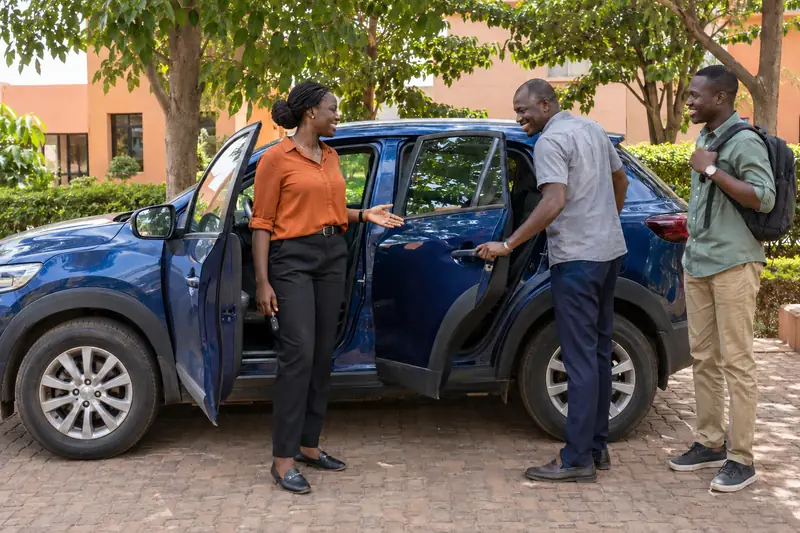
In Congo, carpooling refers to the practice of a driver taking passengers along on a trip they are making anyway, for instance between Brazzaville and Pointe-Noire, and asking them to cover part of the fuel. It spreads mainly through friends, colleagues, churches and messaging groups, since no national platform dominates. Because roads are long, conditions change with the season and public transport is limited in places, shared travel can bring real savings and real risks, so preparation and clear understanding between driver and passengers are essential.
The main routes where seats are shared
The best known corridor in the Republic of the Congo is the national road linking the capital, Brazzaville, with the port city of Pointe-Noire on the Atlantic coast. Drivers who go back and forth for business or family reasons are the most likely to offer seats. Other routes lead north from Brazzaville towards Owando and Ouesso, and towards the towns of the Niari valley, such as Dolisie.
- Business travellers heading to the port of Pointe-Noire.
- Families travelling for ceremonies and holidays.
- Workers in the oil and forestry sectors who move between sites.
Across the Congo river, neighbouring Kinshasa lies a short distance from Brazzaville, but crossing the border involves documents and procedures that shared-ride passengers must plan for separately.
How carpooling in Congo is arranged day to day
Most journeys begin with a message in a group or a phone call. A driver mentions the date and destination, passengers respond, and the details are confirmed closer to departure. Because trust is built through acquaintances, a recommendation from a mutual friend carries more weight than any online profile.
Before leaving, agree on the meeting point, the latest waiting time, the amount of luggage and the price. Settle whether the contribution is paid at the start or on arrival. Exchange phone numbers, and make sure each person's phone is charged. For return journeys, avoid vague promises: confirm the date and time in writing. These small habits turn an informal favour into a dependable service for people who travel between the same towns regularly.
Dividing the cost of fuel and other expenses
Fuel is the main item, followed by repairs and the wear that long distances cause. A fair share takes the total cost of the trip, divided by everyone in the car. Because distances are long, even a small mistake in the estimate can produce a noticeable difference per person.
- Ask the driver for the approximate fuel consumption of the vehicle.
- Add tolls, ferry fees if any, and parking at the destination.
- Fix the price before departure and avoid changing it midway.
Many drivers also accept contributions through mobile money, which avoids carrying large sums of cash. It is polite for passengers to help with a refreshment stop and for drivers to remain open about their expenses, so that nobody feels either exploited or taken for granted.
Choosing between rail, coaches and shared cars
The railway between Brazzaville and Pointe-Noire has long been a major means of travel, and bus companies also run services on the principal roads. These options provide a ticket, a timetable and a company that can be held accountable, which suits travellers who value predictability.
A shared car stands out when the train does not fit the schedule or when the traveller wants to be dropped near a precise address. It also allows luggage that coaches might refuse. On the other hand, the traveller bears more responsibility for judging whether the driver and vehicle are reliable. Comparing price, duration and level of comfort across all three means of travel is the sensible approach before committing to a long trip.
Safety on Congolese roads
Long distances, heavy lorries and sections affected by rain make careful driving vital. Drivers should check tyres, brakes and lights before leaving, carry a spare wheel and basic tools, and avoid night driving when roads are unlit. Passengers are entitled to ask the driver to slow down and to refuse to board an overloaded vehicle.
- Share the driver's name, plate and route with a relative.
- Keep identity documents handy for checkpoints.
- Bring drinking water and a charged phone.
- Do not accept alcohol-influenced driving under any circumstances.
In case of a breakdown, staying with the vehicle in a visible place is usually safer than walking. Preparation does not remove every risk, but it reduces most of the avoidable ones. Travelling in a convoy of two cars on remote sections, or telling someone when you reach each major town, adds a further layer of reassurance on very long stretches.
Everyday commuting in Brazzaville and Pointe-Noire
Both major cities experience congestion at peak hours, and many workers rely on minibuses, shared taxis and motorbikes. Employees who own a car often welcome colleagues from the same district, splitting costs and reducing the time spent searching for a parking space. Companies in the oil sector have long organised staff transport, and informal arrangements among workers follow a similar logic.
A daily group works best with a simple code of conduct: leave at the agreed time, respect the waiting limit, warn others of absence and take turns to drive. When floods or roadworks block a usual route, the group can decide together on an alternative. Over several months, such cooperation lowers the monthly transport bill and creates a modest sense of community among neighbours.
Rules, papers and responsibility
Drivers must hold a valid licence and keep vehicle documents and insurance up to date. Authorities regularly check papers, and a driver without them risks delays or fines that affect everyone on board. Passengers carrying goods should declare them honestly to avoid trouble at checkpoints.
- Carry an identity card or passport for every passenger.
- Check that the insurance covers passengers, and ask the insurer how.
- Keep contributions to the cost of the trip, without profit.
A driver who makes a regular business of carrying paying passengers may be regarded as a commercial transport operator, and different rules then apply. If you are unsure, ask the local transport office. Knowing the position in advance protects both sides.
Building trust for repeat journeys
Trust grows with repetition. A driver who leaves on time, drives calmly and keeps promises quickly gains a loyal group. Passengers who arrive punctually, pay without delay and respect the car receive offers more readily the next time.
Keep communication honest when plans change, for example if a delay is expected or the route is altered. Avoid taking on additional people at the last moment without informing the others. If a disagreement occurs, handle it politely and privately. In places where formal carpooling services are still rare, reputation is the strongest guarantee, and every pleasant journey strengthens the habit of sharing the road in Congo.
Transport operators and mobility services in Congo
- Chemin de fer Congo-Océan (CFCO) : National railway company running passenger trains between Brazzaville and Pointe-Noire, a key alternative to the road.
- Océan du Nord : Passenger transport company operating coach services between Congolese towns.
- Trans Air Congo : Airline serving domestic routes for travellers who prefer not to cover long distances by road.
Further reading
- World Bank in the Republic of Congo : Background on transport and infrastructure in the country.