
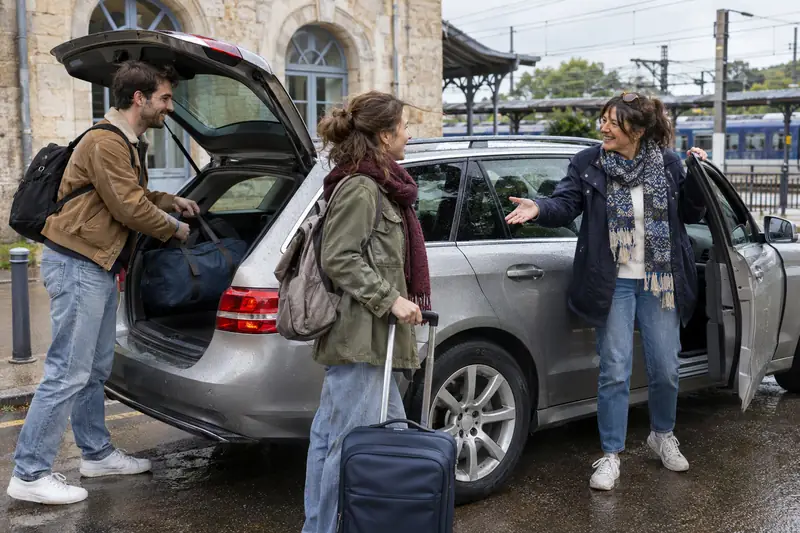
In Bordeaux, car sharing between individuals means that a private owner makes their car available to other people for a few hours, a day or a weekend, usually through an online platform, in exchange for a rental price. It gives residents who live without a car occasional access to one, and gives owners a way to cover insurance, parking and maintenance costs. The platform normally handles the booking, payment and insurance, but both sides must still follow clear rules for handover, fuel and return.
Why the idea fits the Bordeaux area
Bordeaux has changed rapidly, with a tram network, pedestrian zones along the Garonne and a large number of cyclists. Many people in the centre live well without a car, yet occasional needs arise: a weekend at Arcachon, a trip to the vineyards of Saint-Émilion or the Médoc, or a visit to family in the Landes. A car borrowed from a neighbour for a day costs less than owning one all year.
- Owners reduce the cost of a car that spends most days parked.
- Residents of Bastide, Chartrons or Saint-Michel find a vehicle close to home.
- Students and newcomers can travel without buying a car.
Parking is limited and costly in many central districts, which strengthens the logic of sharing a vehicle among several households.
Car sharing between individuals in Bordeaux: platforms and cooperatives
Commercial platforms for renting a private car operate nationally and cover the Bordeaux area, with a listing system, online payment and insurance included. In addition, a local cooperative car sharing network offers shared vehicles in the city and its surroundings, partly through members who place their cars at the community's disposal. Neighbourhood associations and building owners' groups sometimes run their own arrangements.
Compare commissions, insurance conditions, the number of cars in your district and the quality of customer support. Read reviews of owners and borrowers, and check that the platform verifies identities and driving licences. If you lend a car informally to a friend, write down the dates, the amount, the fuel arrangement and who pays for fines, and inform your insurer beforehand to confirm that the loan is permitted by your contract.
Insurance, documents and responsibility
The most common problem in peer-to-peer rental is a misunderstanding about insurance. Platforms usually include a policy covering the vehicle and the driver during the rental period, with a deductible that applies to damage. Owners should check whether their personal insurer accepts rental to third parties and what happens to their no-claims bonus after an incident.
- Borrowers must hold a valid driving licence for the minimum number of years required.
- Keep the registration document and insurance certificate in the car.
- Take photos of the car before and after each rental.
Traffic fines are sent to the registered owner, who then identifies the driver; the platform may manage this procedure, but borrowers remain responsible for offences committed during the rental.
Low emission zone and local traffic rules
Bordeaux Métropole applies measures to limit pollution from older vehicles, based on the vehicle's emissions sticker. Owners should check the category of the car, and borrowers should verify whether the planned journey enters a restricted area. Rules and calendars change over time, so consult the metropolitan authority's information before travelling.
Within the city, speed limits are low on many streets, and cycle lanes and tram tracks require attention. The ring road, called the Rocade, is heavily used and often saturated at peak hours, particularly around the bridges over the Garonne. Parking zones are controlled, and rates vary by district. A good habit is to ask the owner where the car is usually parked and what to do on arrival so that you do not lose time looking for a space.
Prices and how to compare
Rental prices depend on the type of car, the season and demand. A compact car costs less than a family estate, and weekends in summer are more expensive. Some platforms offer an hourly price, while others ask for a daily rate with a kilometre allowance.
- Compare with professional car sharing and with conventional rental agencies.
- Check the mileage limit and the price per extra kilometre.
- Include fuel or electricity, parking and tolls on motorways.
For a short errand in the city, tram, bus or bicycle usually costs less. For a day trip to the coast or the countryside, a borrowed car can be competitive, especially when several people share the price. Owners should consider the tax treatment of the income earned and the impact of extra wear on the vehicle.
Handover, return and good habits
Meet the owner at a convenient place or collect the car with a keyless system. Inspect the interior and the exterior, check the fuel or battery level and test the lights. Photograph any marks and keep the pictures until the rental is complete and the deposit is returned.
On return, leave the car clean and at the same fuel level, and park it in the agreed place. Warn the owner if you expect to be late, since the next borrower may depend on it. Report any damage honestly and at once, as a quick report is easier to resolve than one discovered later. Honest reviews on both sides build trust on the platform and make the community useful for the whole city.
Complementing tram, bicycle and train
Car sharing between neighbours is not a replacement for the rest of the mobility network. The tram lines, the bus system and the shared bicycles cover most daily needs in the city. The regional train serves Arcachon, Libourne and Angoulême, and the main station links the city with Paris by high-speed train.
A borrowed car is useful for destinations without easy public transport, such as small wine estates, forest trails and beaches outside main stations. Many residents keep a subscription to public transport and use car sharing only as an occasional complement. Calculating your yearly spending on a car compared with this combination often shows significant savings, and it frees you from maintenance, parking permits and insurance for a car that sits idle most of the week.
Avoiding scams and problems
Keep all communication and payments inside the platform. Refuse requests to pay by bank transfer to a private account or to meet away from the agreed place. Check that the profile has been verified and that the vehicle matches the photos in the listing.
Owners should never hand over keys without the platform's verification of the driver. Borrowers should be wary of listings that are far below the average price. In case of an accident, call emergency services if there are injuries, fill in a joint accident report with the other driver, photograph the scene and contact the platform. Preserving messages and receipts will help the insurer to settle the case quickly and fairly.
Car sharing and mobility services in Bordeaux
Further reading
- Bordeaux Métropole : Local authority providing information on traffic rules, parking and the low emission zone.