
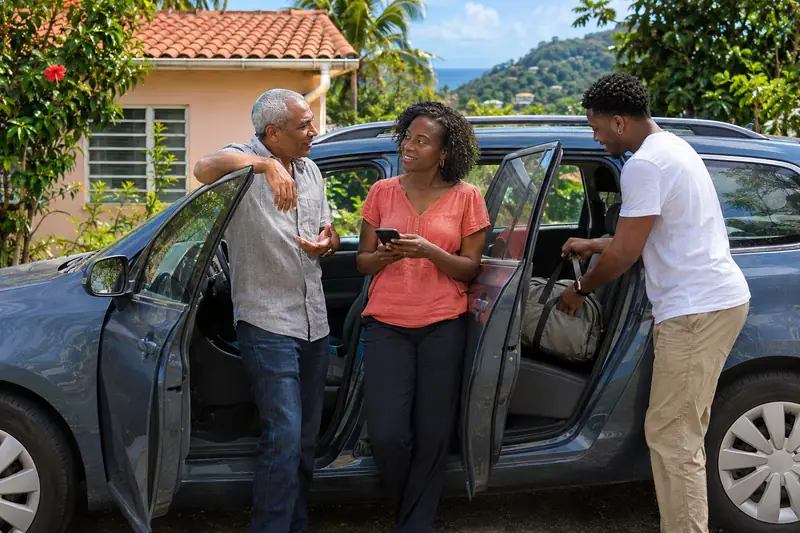
In Geneva, car sharing between individuals is the practice of lending a private car to another person for a fee, either through a platform or through a direct agreement. It helps owners reduce the high cost of parking and insurance in Switzerland, and it gives residents, cross-border workers and visitors a car for a day or a weekend. The city has a strong tradition of cooperative car sharing, which makes the idea familiar to residents, cross-border commuters and visitors alike.
A city where car sharing is a tradition
Switzerland was one of the first countries to organise cooperative car sharing, and Geneva benefits from a dense network of shared cars in car parks and on streets. Residents are used to booking a vehicle by the hour through a card or an application, and many households have no car of their own.
Private sharing complements this offer. An owner who uses a car for the commute to the airport or the international organisations can lend it in the evenings and at weekends. A resident without a car can borrow one for a day in the Jura, the Alps or the vineyards around the lake.
The high costs of parking and of insurance in Geneva make the financial case for sharing particularly strong.
The options: cooperative, platform or direct loan
In Geneva, you can share a car in three ways. Cooperative and company car sharing gives members access to vehicles in stations and, in some cases, free-floating cars within a zone. Peer-to-peer platforms let private owners list their cars. A direct loan between friends or colleagues is the most informal option.
- Cooperative: reliable availability, subscription and usage fees.
- Platform: a wider choice of models and sometimes lower prices.
- Direct loan: no fees but all the responsibility.
Compare these options according to your needs. A frequent user may prefer a subscription, while a person who needs a van twice a year will choose a platform. Check the rules about age, licence duration and deposit for each.
Insurance and liability in Switzerland
Third-party liability insurance is compulsory for every vehicle in Switzerland. Owners often add comprehensive cover, and the policy contains rules about who may drive and about paid use. Ask the insurer in writing whether lending the car for money is covered and whether the excess changes for other drivers.
Platforms and cooperatives provide their own cover for the rental period. The excess can be high, so a borrower should read it before booking. Reduction options exist in some offers.
After an accident, make a report, take photographs and inform the owner or the operator at once. In Switzerland, the police should be called for accidents with injuries or significant damage. Keep the vehicle documents in the car and carry the insurance certificate, because a check can occur at any time, especially near the border.
Car sharing between individuals in Geneva and across the border
Geneva is surrounded by France, and many residents live on one side of the border and work on the other. A shared car may therefore cross the border several times a day. Check with the owner and the insurer that the cover applies in France, and carry the documents proving it.
Switzerland requires a vignette for the use of motorways, and a car without one risks a fine. Ask whether the vignette is on the windscreen. In France, a Crit'Air sticker may be required in certain zones, such as in the area of Lyon or Annecy, so ask about that too.
Fuel is generally cheaper in France, but the owner may ask the borrower to return the car with a tank filled to the same level. Agree on this before leaving to avoid disagreement.
Parking and getting around the city
Geneva has a system of blue zones, with limited parking time, and of paid and resident-only places. Parking can be costly, and fines are common for those who exceed the time. Borrowers should ask the owner where the car is parked and whether a permit is needed.
Public transport is efficient: trams, buses, trolleybuses, the lake boats and the regional train all serve the city. A shared car is more useful for trips that these networks do not cover, such as to the mountains, to a hiking trail or to a rural village.
Traffic is heavy at the border crossings in the morning and the evening, and waiting times can be long. Plan the return of the car with a margin so that the owner is not left waiting after a delay.
Costs and fair pricing
Costs in Switzerland are high, and that affects the price of a shared car. The owner must consider insurance, the motorway vignette, servicing, tyres, depreciation and parking. Dividing these by the number of days of loan gives a base for the daily price.
The borrower should compare the total with the price of a cooperative booking for the same period, which often includes fuel and insurance. A direct loan may look cheaper but may not include the protection that an operator provides.
An allowance of kilometres, a deposit and a clear fuel policy bring clarity. Foreign visitors should check the currency and the way of payment, since some platforms accept only Swiss cards or require a local bank account for owners.
Handover, checks and good practice
At the start of a loan, inspect the car with the owner, photograph all sides and note the mileage and the fuel level. Ask how to use the heating, the parking system and any special equipment. In winter, ask whether the car has winter tyres and whether chains are supplied.
At the end, repeat the inspection and compare the photographs. Report any damage at once through the platform or in writing. Be punctual and leave the car clean.
Owners should keep a record of each loan, the amounts received and the costs, since income from lending a car may be subject to tax. Rules differ between cantons and depending on the activity, so check the local guidance or ask an adviser.
Winter conditions and trips to the mountains
Geneva is close to the Jura and the Alps, and many borrowers use a shared car to reach ski resorts, mountain villages and hiking areas. In winter, snow and ice can make roads dangerous, and borrowers must be ready to equip the car with snow chains where signs require them.
Ask the owner whether the car has winter tyres and whether a set of chains is kept in the boot. Practise fitting them in good conditions rather than on a roadside in the dark. Check the fuel level before a mountain climb and keep the tank at least half full.
Mountain roads in France and Switzerland sometimes close because of snow or avalanche risks, so check the road reports before leaving. A short message to the owner about your plan and your expected return time shows consideration and gives the owner peace of mind.
Organisations offering shared cars in Geneva
- Mobility : A Swiss cooperative offering shared cars in stations in Geneva and across the country, booked by the hour or the day.
- Catch a Car : A free-floating car-sharing service in Geneva, with vehicles that can be picked up and left within a defined zone.
- Sharoo : A Swiss platform where private owners rent their cars to other users through an application.
Further reading
- Touring Club Switzerland : A mobility club offering information on driving, vehicles and insurance in Switzerland.