
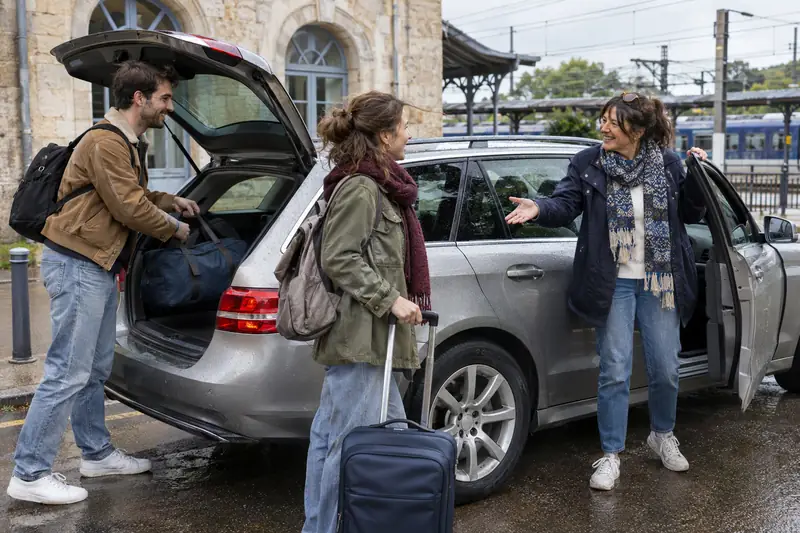
In Quebec, carpooling means that two or more people use a single private car for the same journey, whether a daily commute, a university trip or an intercity ride between Montreal, Quebec City, Sherbrooke or Gatineau, and divide the expenses. The practice has a long history in the province, with organised networks, reserved lanes on some highways and strong winter requirements. The driver is not a professional carrier, and the contribution should remain a fair share of the real costs of the trip.
A long tradition of sharing the road
Quebec has a lively culture of ride sharing, shaped by long distances, large student populations and high winter heating and driving costs. Organised intercity services have existed for decades, and informal arrangements among colleagues and classmates are common. Highways such as the 20 and the 40 link the major cities, and the 15 and the 10 connect Montreal with its suburbs and the Eastern Townships.
- Montreal to Quebec City is the busiest intercity corridor.
- Gatineau and Ottawa form a cross-provincial commuting region.
- Regional universities attract students from across the province.
These flows explain why so many drivers and passengers look for partners, and why the question of cost and safety in winter weighs heavily on the habit.
Carpooling in Quebec: networks, apps and workplace groups
A number of services allow drivers to publish trips and passengers to reserve seats, with membership, payment and sometimes insurance information handled by the organisation. Regional transport bodies and some municipalities also promote platforms for commuters. In addition, many employers, hospitals and universities run internal groups and ridematching events, particularly in the Montreal and Quebec City areas.
When you use any network, read the profile, check reviews and confirm details of the meeting point, luggage and payment. For regular commuting, meeting colleagues in person before starting is a good idea. Discuss routes, schedules and any flexibility needed. A short written agreement, even in a text message, is the best way to avoid disputes later and to keep expectations realistic for everybody in the car.
Reserved lanes and what they offer
On certain highways around Montreal and Quebec City, lanes are reserved at peak hours for buses, taxis and vehicles with two or more occupants. These measures aim to reduce congestion and reward shared travel with shorter journey times. Signs show the days, the hours and the minimum number of occupants required.
- Check the signs at the entrance of the lane, since rules vary by site.
- Do not enter the lane if you are alone in the car at the hours indicated.
- Leave the reserved lane only where the markings allow it.
Fines for illegal use can be high, and enforcement is regular. For daily commuters on busy corridors, a reserved lane can save a considerable amount of time, which makes forming a group of two or three colleagues particularly worthwhile.
Winter driving and equipment
In Quebec, winter tyres are mandatory from the beginning of December until mid-March, and the rule applies to all passenger vehicles registered in the province. Snow, ice and low temperatures affect visibility, braking distance and battery life, so drivers should prepare carefully for each trip.
A winter kit is a wise precaution: a scraper and brush, a shovel, jumper cables, a blanket, a flashlight and some food and water. Keep the fuel tank at least half full and carry a charged phone. On long journeys, check road conditions through the provincial road information service before leaving, and be ready to postpone if a storm is forecast. Passengers should wear warm clothing and avoid placing heavy items on the rear shelf, where they could become projectiles if the car stops suddenly.
How to share the costs
The standard method is to add fuel, tolls where they apply and parking, then divide the total by the number of people in the car. For daily commutes, a monthly amount per passenger is simpler than counting each trip. In winter, a driver may wish to include a small amount for the wear of winter conditions, but the contribution should still reflect real costs.
- Agree on payment by cash or electronic transfer, widely used in Quebec.
- Rotate drivers when cars and distances are similar.
- Keep a note of the kilometres and costs if you share for a long period.
Making a profit would change the nature of the arrangement, may affect insurance and could fall under rules for paid passenger transport. Transparency is the best policy.
Insurance and legal points
Auto insurance is mandatory in Canada, and in Quebec the public insurance plan covers bodily injury for everyone involved in a road accident, regardless of fault, while private insurers cover property damage. Even so, it is wise to inform your insurer that you share rides, especially for regular commuting.
Drivers must carry their licence, registration and proof of insurance. Passengers must wear seat belts, and children must use suitable car seats based on age and size. Paid passenger transport as a business requires a specific permit, which is why carpooling must stay within shared costs among private individuals. If a platform is used, read its conditions concerning payments, cancellations and liability. When in doubt, contact the provincial transport authority or your insurance broker.
Alternatives: buses, rail and car sharing
Intercity coach lines connect most large towns, and regional rail services operate in the Montreal area. Within Montreal, the metro, buses and commuter trains cover wide areas, and several shared car services provide vehicles by the hour or day. For occasional trips, those can be more flexible than owning a car.
A carpool is attractive when schedules do not match, when the destination is not on a bus route or when several people travel together. It may also be preferable on long winter trips when buses are delayed. Compare the total price and travel time, including waiting and transfers. For one person making a single journey, a coach may be cheaper and safer in bad weather; for groups of three or four, sharing a car often wins on cost and comfort.
Tips for a pleasant and safe trip
Confirm the plan the day before, including the departure time, pick-up point and what to do if the weather turns bad. Arrive a few minutes early, bring small luggage and respect the driver's rules. Both parties should keep a phone number handy and share the route with a relative.
- Check road conditions on the day of travel.
- Take regular breaks on long drives and rotate drivers where possible.
- Be courteous and discuss music and conversation preferences.
Leave a review if the platform allows it. In a province where winter can turn a simple trip into a challenge, the quality of the people you travel with matters as much as the price. A reliable, polite and punctual partner is the best asset of any carpool.
Carpooling and mobility organisations in Quebec
- Amigo Express : Quebec-based carpooling service that matches drivers and passengers on intercity routes.
- Orléans Express : Intercity coach company connecting Montreal, Quebec City and many other towns.
- Communauto : Pioneering car sharing company offering vehicles by the hour in Quebec cities.
Further reading
- Équiterre : Quebec non-profit promoting sustainable transport and ecological mobility.