
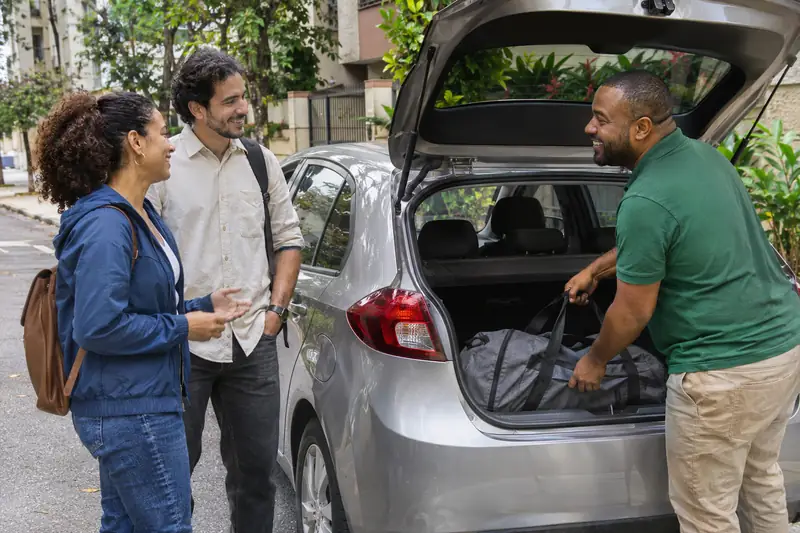
In Brussels, a monthly car subscription is a rental formula in which one monthly payment covers the car, insurance, road tax and servicing, with no purchase and no loan. Contracts last from a month to about two years, and the car is delivered to your address. In a capital with heavy traffic, a low emission zone and limited parking, the flexible formula appeals to expatriates, European institution staff, students and residents who want a car without the full cost of ownership.
Why a subscription fits life in the capital
Brussels is an international city, with many people who live there for a limited period: staff of European institutions, diplomats, consultants, researchers and students. They often need a car for a few months or a few years, and they do not want to buy, register and resell a vehicle.
The city also has a dense public transport network of metro, trams and buses, and car sharing is well developed. A subscription is therefore a complement for particular needs, such as visits to the Ardennes or to the coast, work outside the city or family trips.
Because traffic is dense and parking is limited, think carefully about the car you choose. A compact model is easier to drive and park and usually cheaper per month than a large one.
What a monthly car subscription in Brussels costs
Prices depend on the model, the term and the distance. Small petrol and hybrid cars are the cheapest, while electric and premium models cost more. A long term reduces the monthly fee, but it reduces flexibility, so match the term to your real plans.
- Check what is included: insurance, tax, servicing, tyres and assistance.
- Ask about the excess, the deposit and any delivery fee.
- Verify the distance allowance and the price of extra kilometres.
- Add parking, fuel or charging to your monthly budget.
Remember to compare with car sharing and short rentals, which can be cheaper for occasional use in the capital.
Low emission zone and the right car
The whole territory of the Brussels-Capital Region is a low emission zone, and access depends on the emission standard of the vehicle. Older diesel and petrol cars face restrictions, and drivers without the right standard risk a fine. Cars supplied by subscription companies are normally recent and compliant, but you should verify that the car you choose meets the rules, especially if it has to be registered abroad.
Vehicles are checked by cameras reading number plates, so a mistake is easy to detect. Ask the provider to confirm in writing that the car is allowed in the zone.
Electric and plug-in cars benefit from favourable treatment in several rules, and may suit city life well.
Parking in Brussels
Parking rules are set by the region and by the municipality, with paid zones, time limits and residents' permits. A permit lets residents park near their home, but it does not guarantee a space. Fines for parking offences can be high, and towing is possible in some cases.
No permit comes with the subscription itself. Because the car belongs to the provider, ask the municipality and the company which documents are needed to register you as the regular user. Many people rent a garage space instead, particularly in dense neighbourhoods.
If you work in the European quarter or in busy areas, check whether your employer provides parking or a mobility budget, because this can change the cost of having a car in the city.
Conditions: licence, age and registration
You need an identity document, a driving licence, a Belgian address or proof of residence and a bank card. European licences are valid. Licences from other countries are accepted for a limited period after registration, after which they need to be exchanged, depending on the country of issue.
The minimum age is often twenty-one, and a minimum period of driving may apply. Providers may run a payment check or ask for a deposit. Diplomatic and institution staff can have special situations, so ask the company how a special status affects registration and insurance.
Provide complete and clear documents, because errors in names or addresses cause delays. After approval, the car is delivered, often within a few days.
Insurance, damage and breakdown
The subscription fee includes insurance, but the excess remains your responsibility. Ask for the amount and for the cost of reducing it. In case of an accident, fill in the European accident report together with the other driver if there is one, take photographs and inform the provider quickly.
If the car breaks down, use the assistance number in the contract. Some providers provide a replacement car, and others only a tow. Ask about this in advance, especially if you rely on the car for work.
Keep the documents in the vehicle, including the registration papers and the insurance certificate, and carry the warning triangle and the high-visibility vest that Belgian rules require.
Ending the contract and returning the car
Check the notice period and the cost of early return. Some contracts let you stop after a minimum period with one month's notice, and others require a fixed term. On return, an inspection compares the car with the delivery report.
Take dated photos of every side, the wheels, the interior and the dashboard at delivery and on return. Keep service documents and bring all keys. Normal wear is accepted. Dents, deep scratches and stains are charged at the contract rates.
Traffic and parking fines are sent to the provider and passed on to you, usually with a handling fee. Keep your contact details updated even after you return the car.
Choosing between offers
Compare at least three offers on the same term and distance, and give more weight to clear conditions than to the lowest headline price. Ask about delivery, customer service in your language and the way the provider handles complaints. Keep the answers in writing, and read the whole contract before accepting it.
If you are unsure how long you will stay, take a short term and extend it. It is usually cheaper than ending a long contract early, and it leaves you free to change your mind.
Ask also about the practical side of everyday use. Can the provider deliver the car to your home or office in the capital, and at what time of day? Is there a branch you can visit if you need advice? How long does a replacement car take to arrive after a breakdown? These details matter more in Brussels than in smaller towns, because a missing car quickly disrupts work and family life.
Finally, check how the contract treats tolls and low emission zone penalties: they are normally paid by the driver, and some providers add a handling fee for each notice they receive.
Monthly car subscription providers for Brussels
- Oscar : A Belgian platform offering monthly car subscriptions with insurance and maintenance included.
- Sixt long-term rental Belgium : A long-term rental offer from a large international group, with flexible monthly terms.
- Cambio : A car sharing network in Brussels that suits occasional trips.
Further reading
- Brussels Mobility : The regional mobility administration, with information on the low emission zone, parking and public transport.