
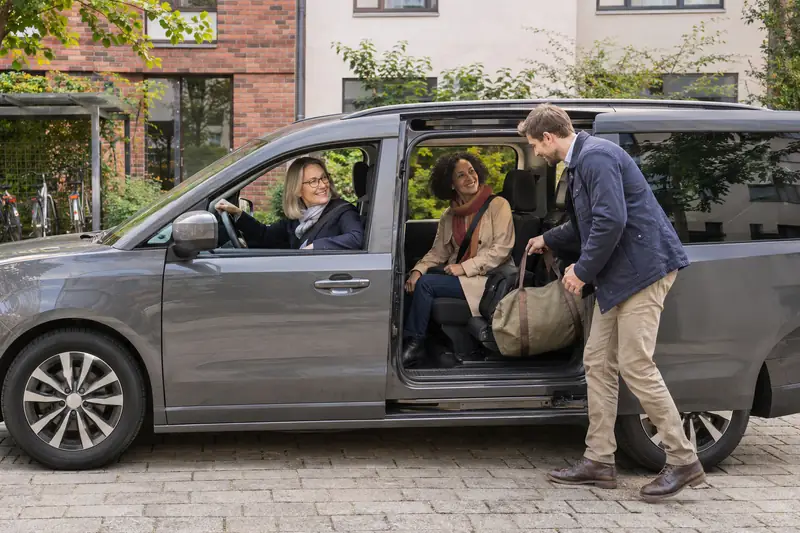
In Montpellier, car sharing between individuals means that a private owner lets another person use a car for a fee, either through a booking platform or by a direct agreement. The owner covers part of the cost of insurance, parking and servicing, and the borrower gets a vehicle without buying one. In a city where trams, buses and bicycles handle most daily journeys, the formula fills the gaps for beaches, villages, weekend trips and moving days, and it is open to students, newcomers and families alike.
In Montpellier, car sharing between individuals and the tram city
Montpellier has built its mobility around trams and a growing network of cycle paths, and public transport is free for residents of the metropolitan area. Many households therefore ask whether they really need a car, and some choose to keep one only for occasional use.
That is where private sharing makes sense. An owner who uses the vehicle a few times each week can lend it for the rest of the time. A student, a newcomer or a household without a car can borrow one for a weekend in the Cévennes, a day at the beach or a trip to the airport.
The large student population also creates steady demand for short, low-cost loans around term breaks and the start of the academic year.
Ways to share: platform, club or direct agreement
The choice of format depends on how much protection and convenience you want. A platform provides a booking tool, a contract and generally a policy for each rental. A car club or cooperative owns its own vehicles and gives members access through a card or an application. A direct agreement between two people is the lightest option but needs a written note and a clear position with the insurer.
- Frequent lenders benefit from a platform that manages calendars and payments.
- Households that share one car with a neighbour can use a simple agreement.
- People who need a car only a few hours a month may prefer a club.
Compare the fees, the excess, the mileage rules and the cancellation conditions of each before you commit.
Insurance: what to check before you lend
Owners should check three things with their insurer: whether other drivers are allowed, whether paid use is covered and how an accident caused by a borrower will affect the bonus. If the answer is unclear, ask for it by email.
When a platform is used, a policy usually applies during each booking. It will mention an excess, a list of exclusions and a delay for declaring damage. Read these points carefully, because they decide who pays if something goes wrong.
Borrowers should confirm that their driving licence is valid and that they meet any age or experience condition. A young driver may face a higher excess. Take photos at the start and at the end of the rental, and report any problem at once so that the claim is handled without delay.
Using a shared car on the coast and around the city
Most trips from Montpellier head south to the beaches of Palavas-les-Flots, Carnon, La Grande-Motte or Sète, or north towards the garrigue and the Cévennes. In summer, roads to the coast are congested at weekends, so leave early or late and tell the owner when you expect to return.
Parking near beaches is often paid and fills quickly. Agree beforehand who pays for it, and remind the borrower not to leave belongings visible in a parked car. Sand and salt can damage the interior, so many owners ask for the mats to be shaken out before the car is returned.
If you plan to cross into Spain, tell the owner and the insurer in advance, because cover abroad and the documents needed may differ from those for local use.
What the price should include
An honest price covers insurance, servicing, tyres, depreciation and the time the owner spends on handovers. Owners can work out a daily rate by dividing their yearly costs by the number of days the car is expected to be lent, then adding a small margin.
Many agree a mileage allowance per day and a charge for extra kilometres. Fuel is normally returned at the same level as at pick-up, and a deposit protects against small damage or cleaning needs.
For borrowers, the comparison is simple: add the daily price, the commission and the fuel, then compare the total with a short rental from an agency or with a trip by train. In a city with good public transport, a shared car makes most sense for journeys that are awkward without one.
Good habits for the owner
Reliability is what earns good reviews. Keep the car clean, serviced and fuelled, answer messages quickly and describe the vehicle accurately, including its size, gearbox, boot space and any known defects.
- Publish your availability and keep the calendar up to date.
- Prepare a short note about the controls and the parking place.
- Keep a spare key in a safe place and know where you can give it.
- Respond immediately if the borrower reports a problem on the road.
Owners who treat each loan as a small service tend to build a base of regular borrowers, which reduces the time spent on new requests and the risk linked to unknown users.
Income and records
Amounts received from lending a car should be recorded and, depending on their level, declared. Keep a list of each loan with dates, prices and costs, and save the statements sent by the platform.
The tax treatment varies with the circumstances, so check the official explanations or ask a professional before making a decision. For one-off sharing of costs between friends, a different logic usually applies than for a regular paid activity.
Also keep the correspondence with your insurer, because it proves that you informed the company of the way you use the car. This can be decisive if a claim is disputed.
Weekend and holiday planning
Demand rises sharply before long weekends and school holidays, when people leave for the mountains, the Camargue or Spain. Owners can publish their calendar early and block the days they need the car themselves, which avoids cancellations that annoy borrowers and hurt a profile on a platform.
Borrowers who need a car for a precise date should book well ahead and keep the confirmation message. For a long trip, ask the owner whether the car has had a recent service and whether the spare wheel or the repair kit is in the boot.
On the day of departure, allow extra time for the handover, particularly if the owner is not on site and the car is opened with a phone. A test of the app before you leave the car park saves a lot of stress later.
Organisations offering shared cars in Montpellier
Further reading
- UFC-Que Choisir : Guides and tests on car hire, insurance and consumer rights.