
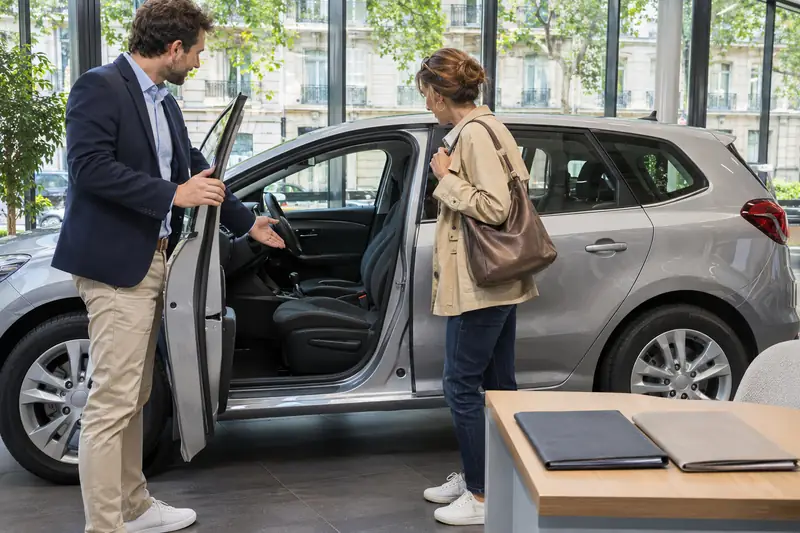
In France, car subscription with a banking ban is a delicate request, because the person usually cannot hold a cheque book or, in some cases, a payment card. A banking ban, called interdit bancaire, follows repeated cheques issued without funds and is recorded in a national file. The ban does not prevent you from having an account or paying by transfer, but many rental companies depend on cards, so the choice of provider and the payment method become truly decisive.
What a banking ban means for a car subscription in France
The banking ban, in French interdit bancaire, results from cheques issued without sufficient funds that were not regularised. The person may no longer write cheques, and the bank may withdraw the payment card. The ban lasts for a limited period and ends once the situation has been regularised or the period expires.
It is important to separate it from other files. It concerns cheques and cards, not credit repayment, which belongs to a different register. You keep the right to a basic bank account, to receive your salary, to pay by transfer and to use direct debits.
For a car rental, this distinction explains why options still exist: the contract is a service, and the only real obstacle is the payment method that the company demands.
The obstacle: cards, deposits and cheques
Most rental contracts rely on a bank card for two things: the monthly fee and the deposit. The deposit is often a pre-authorisation, meaning the amount is blocked on the card and released at the end. If you do not have a card in your own name, that standard system does not work.
Companies commonly ask for one of the following:
- a card in the driver's name;
- a direct debit mandate on a current account;
- a cheque deposit, which is impossible during a ban;
- a bank transfer before the start date.
Because cheques are excluded, you will need to propose transfers or debits. Ask each provider early, since the answer is often a simple internal rule rather than a decision about you personally.
Payment solutions that can work
Several solutions allow you to pay without a classic card. A prepaid card, sold by banks and by some online services, can serve for the deposit if the provider accepts it, although some refuse prepaid cards for pre-authorisations. A transfer made a few days before delivery is accepted by smaller providers, and a direct debit can handle the monthly fee.
You may also ask a trusted relative to act as payer or guarantor, with their own card, provided the contract allows a different payer from the driver. Be sure that this person understands the commitment, because they may be asked to cover damage or unpaid fees.
Do not try to hide the ban by using someone's card without telling the company. Contract terms usually require the cardholder to be named, and a hidden arrangement can void the cover.
How to present your application
Explain your situation clearly and early, and offer a payment method that suits the company. Prepare supporting documents so the provider can judge your reliability beyond the ban itself.
- A driving licence, an identity document and proof of address.
- Recent payslips or evidence of income.
- A bank statement showing that your account is now in order.
- A letter from your bank confirming the status of the ban and its end date, if you have it.
A calm, factual explanation tends to work better than a long justification. Mention that your account is regularised and that you can pay by direct debit or transfer, then ask what the company needs to proceed.
Costs and conditions to watch
A company that accepts higher risk may price it into the conditions. Watch for a larger deposit, a higher first month's payment, a limit on mileage or a stricter excess. Compare the total cost over the period you plan to keep the car, not only the monthly price.
Also check the insurance details:
- who is the named driver and policyholder;
- the excess after a claim and how it is paid;
- the handling of fines and tolls;
- the notice period if you want to stop early.
When your budget is limited, avoid a premium model and favour a modest car with predictable costs. One unexpected bill can be harder to absorb than the monthly fee itself.
Alternatives while the ban is in force
If a subscription is not possible, other solutions exist. Car sharing services in large cities often rely on an app and a registered payment method, which can be a transfer-funded account or a card from a partner bank. Rental between private individuals sometimes allows payment by transfer, depending on the owner. For regular trips, a combination of train, coach and occasional rental can cost less than a monthly formula.
You can also work on the root cause. Ask your bank about the steps to regularise the account, clear the amounts owed and request the end of the restriction when the conditions are met. Once the ban has ended, your choice of providers widens quickly.
Your rights and where to get help
You have the right to a bank account and to basic banking services, even during a ban. If your bank refuses an account, the Banque de France can designate a bank to open one. Consumer associations and free debt advisers can also explain your options and help you make a realistic budget.
Be careful with offers that promise to lift a ban for a fee. The ban ends through regularisation and the passing of the legal period, not through a paid service. Never send money to intermediaries who guarantee a result.
Before signing any rental contract, take time to read it fully, ask for a copy and keep every email. A well-prepared request, with a payment method that suits the company, gives you the best chance.
Planning the first months with a banking ban
Think of the first months as a trial that builds trust. Choose a small contract with a short commitment, pay on time by the method agreed and keep proof of every payment. Providers value a clean record, and good habits make later requests easier.
Keep a monthly buffer in your account to cover the direct debit and avoid new rejections. Set a calendar reminder for the date on which the ban is due to end, and ask your bank for written confirmation when that happens.
When the restriction is lifted, you may be able to move to a standard subscription with a card deposit, which is often cheaper and more flexible. Until then, patience and regular payments are the most useful tools you have.
Companies renting cars by the month in France
- Ucar : French rental network with local agencies, offering vehicles for several weeks or months.
- Rent A Car : Rental brand with many agencies in France and offers for longer periods.
- Getaround : Peer-to-peer platform where owners set the conditions, sometimes with flexible payment options.
- Hertz France : International rental company with long-term rental options through its French branches.
Further reading
- UFC-Que Choisir : French consumer association offering guides and advice on banking, contracts and consumer rights.