
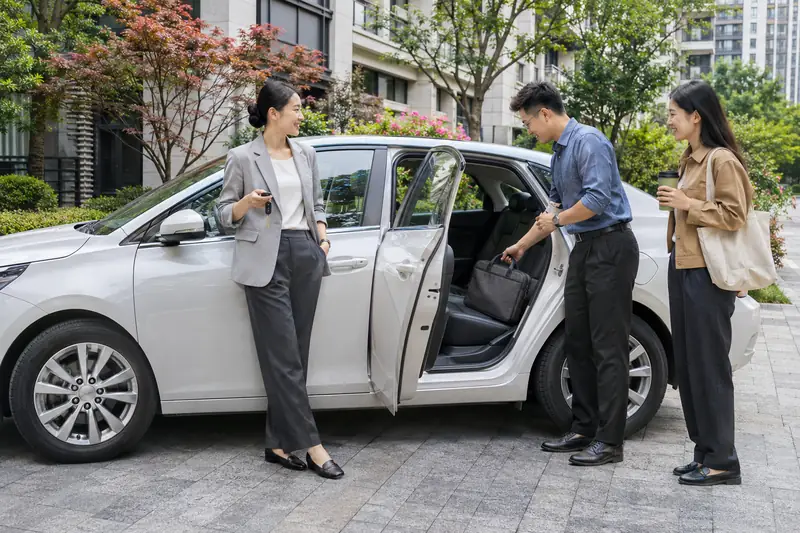
In Paris, car sharing between individuals allows a private owner to lend a car to another person for a fee, generally through an online platform that manages the booking, the payment and the cover. In a city where parking is expensive, the metro is dense and many households own no vehicle, it gives owners a way to share costs and gives residents access to a car for moving, weekend breaks or trips outside the region, without the burden of ownership.
A car is a luxury in the capital
Parisians have an extensive network of metro, tram, bus and suburban train lines, plus bicycles and walking. Owning a car means paying for insurance, servicing and, above all, a parking space, which can cost as much as a small flat in some districts. Many cars therefore stand still for days.
That situation explains the appeal of sharing. A resident who keeps a car for holidays can lend it the rest of the time, and a household without one can borrow a vehicle for a weekend in Normandy, the Loire valley or the forest of Fontainebleau.
The city has also lived through the rise and fall of large public car-sharing schemes, which showed both the demand for short-term cars and the difficulty of running them. Private sharing is now one of the options that remain.
The ways to share a car in Paris
Residents can choose between platforms with private cars, car clubs with their own fleets, free-floating services and direct loans. Each has strengths and limits.
- Peer-to-peer platforms: variety of vehicles, often close to home, with a contract and cover for each booking.
- Car clubs: fixed stations, usually in public car parks, with booking by hour or day.
- Direct loans: no fee, but you must manage the insurance position and the paperwork yourself.
Borrowers who need a car at short notice may prefer a service with an application and keyless entry. Owners who lend only a few times a year may be satisfied with a direct agreement among neighbours or colleagues, provided they have checked the insurance.
Insurance, excess and the no-claims bonus
Insurance is the main concern for owners. Before you lend, ask your insurer whether other drivers are allowed, whether payment changes the position and how an accident would affect your bonus. If your policy does not allow paid use, the platform policy becomes essential.
The cover offered during a booking usually involves an excess that the borrower pays in case of damage, and a list of exclusions. Read them before accepting a request and ask the platform how claims are handled, how fast and by whom.
In a large city, minor damage from parking manoeuvres is common. Take photographs at every handover, keep the receipts for any repairs and report incidents without delay. A clear file shortens the process and reduces the risk of a dispute between owner and borrower.
Car sharing between individuals in Paris and the low-emission zone
Paris and the inner suburbs restrict the circulation of the most polluting vehicles through a low-emission zone based on Crit'Air stickers. An owner should know the class of the car, display the sticker and give the information in the advertisement. A borrower who drives a car that is not allowed may receive a fine.
The périphérique and the main roads are crowded at peak times, and some streets are closed for events. Borrowers should plan their route, check traffic restrictions and take care when parking in controlled areas.
Electric and hybrid cars are common on platforms, and they carry advantages in terms of restrictions. Borrowers should ask about charging: which cable is supplied, which network the owner uses and what level the battery should have at return.
Parking and handover in a dense city
Finding a place to meet is often harder than agreeing on the price. Many owners park their car in a private garage or a residential car park with an entrance code or a badge, so the handover must be organised carefully.
- Give the exact address, the level and the number of the space.
- Explain how to open the barrier and how to leave.
- Agree who pays for parking if the car returns late.
- Photograph the car on the spot and note the mileage.
When the car is opened with a smartphone, the owner does not need to be there, but the borrower must test the opening before leaving the car park. If the application does not respond, contact the platform support at once and keep a record of the time of your call.
What it costs and what it brings in
The cost of a shared car for the borrower is the daily price plus fuel, tolls, any parking and the platform fee. For the owner, income should be compared with real costs: insurance, servicing, tyres, depreciation and the space.
In Paris, where fixed costs are high, even a modest number of loans can lower the annual cost of keeping a car. Yet an owner should not count on a fixed amount, because demand varies with the season and the day of the week.
A distance allowance, a cleaning rule and a deposit help to protect the owner. Borrowers should check these conditions in advance and compare the total with a short rental from an agency, which may be cheaper for a long trip but less convenient near home.
Declaring income and keeping records
Money received from lending a car is income. Keep a register with the date of each loan, the amount, the platform fee and the costs related to the vehicle. Annual platform statements make the task easier.
The way the income is taxed depends on the amount and on how regularly you lend the car. Check the official guidance or consult an adviser, and avoid relying on rumours about thresholds.
Keep the contracts, the messages and the receipts in an organised folder. If a borrower, an insurer or an administration asks a question later, you will be able to answer precisely. The same folder is useful if you decide to stop lending and need to prove the history of the car.
Moving, shopping and weekend escapes
In Paris, the most common reasons for borrowing a car are practical. Residents need to carry a bulky purchase from a furniture store, move boxes between flats, take children and luggage to a station or leave the city for a weekend. A car for three or four hours, picked up near home, is often enough.
Owners who live close to a metro station can adapt to this demand by offering short slots in the middle of the day, when they are at work, and by keeping the boot clear and the car clean. A roof box, baby seats or a bicycle carrier, when available, make the offer more attractive and justify a higher price.
Borrowers should state the purpose of the trip in their request, since owners often prefer to know whether the car will carry luggage, animals or equipment before accepting.
Organisations offering shared cars in Paris
- Getaround : A platform with many private cars in the Paris region that can be unlocked with a smartphone.
- Ubeeqo : A car-sharing service with vehicles in stations and car parks across the capital, bookable by the hour.
- Zity : A free-floating service with electric cars that can be picked up and left within a defined area.
Further reading
- UFC-Que Choisir : Consumer advice on car rental, insurance and disputes with service providers.