
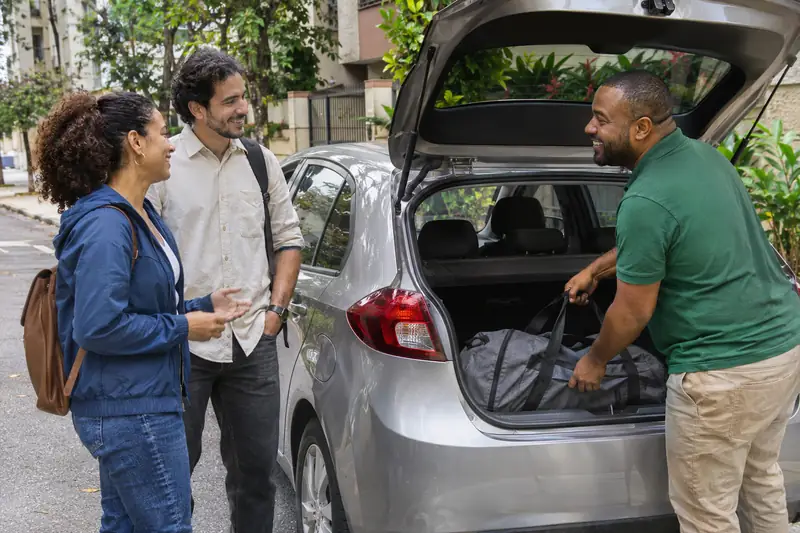
In Switzerland, a monthly car subscription is a flexible rental in which one fixed payment covers the car, insurance, cantonal vehicle tax and servicing, with no purchase and no loan. Contracts are short or medium term, often from a few months to two years, and some can be ended with a notice period. It attracts residents who do not want to bear the cost of a purchase, newcomers still settling in, and households that wish to test an electric car before choosing a long-term solution.
How the Swiss subscription model works
You choose a car on a provider's website, select the term and the yearly distance, and upload your documents. After a check, the company delivers the car to your address or to a partner garage. The provider remains the keeper and registers the vehicle with the cantonal road traffic office, so you do not deal with the plates and technical inspections yourself.
Switzerland has high vehicle prices and high insurance costs, which explains why the formula has grown. It is especially useful for cross-border commuters, students and professionals on temporary assignments in Zurich, Geneva, Basel or Lausanne.
Each provider operates in its own regions, so confirm that delivery and service points exist near where you live and work.
Delivery is sometimes free within a given radius and charged beyond it, so ask for the delivery price early, especially if you live in an alpine valley.
What the monthly fee covers
A typical Swiss package includes liability and comprehensive insurance, the cantonal motor vehicle tax, servicing, wear repairs, tyres and assistance. The motorway vignette may be included, and a set of winter tyres is common in offers for mountain regions.
- Paid by you: fuel or charging, parking, fines and tolls in tunnels such as the Great St Bernard.
- Limits: a yearly or monthly distance allowance, with a price for extra kilometres.
- Possible fees: delivery, deposit and a charge for early termination.
Check the excess for damage and whether it can be reduced, since a high excess can matter on narrow mountain roads and in tight city car parks.
What a monthly car subscription costs in Switzerland
Swiss prices are higher than in neighbouring countries, but so are the costs of buying and insuring a car. A small petrol model is the cheapest option, electric cars may cost more per month but save on energy, and premium models are the most expensive.
Compare the monthly fee with the full cost of owning the same car: purchase price and depreciation, insurance, cantonal tax, servicing, tyres and parking. For a stay of two or three years, a subscription is often competitive because you avoid depreciation and resale. For long ownership and high mileage, a purchase can be cheaper.
Ask for the price including all mandatory elements and whether value added tax applies to your case, in particular for a business customer.
If you plan to move canton during the term, ask how the vehicle tax and the registration are handled, because a change of residence may alter the cantonal costs.
Conditions, licence and residence status
You need a valid driving licence, an identity document and, for residents, a residence permit and a Swiss address. Foreign licences are accepted for a period after arrival and must then be exchanged, depending on the issuing country, so ask the provider what applies to you.
Providers may require a minimum age, often twenty to twenty-five, and a minimum period of driving. They check your solvency, usually through a debt enforcement register extract or a credit check. Cross-border commuters can sometimes subscribe if they work in Switzerland, but this depends on the company and the registration rules.
Keep your documents ready, because a complete file speeds up delivery.
Driving rules and costs on the road
Switzerland has strict speed limits, active radar enforcement and heavy fines. A valid vignette is needed for motorways, and winter equipment is advisable in mountain areas even where it is not compulsory, because the driver can be held responsible after an accident caused by unsuitable tyres.
Parking in cities follows colour-coded zones: blue zones allow limited time with a disc, while white zones are usually paid. Residents can apply for a permit with the local authority.
Fuel is expensive compared with neighbouring countries, which makes refuelling in border areas tempting. Check that your contract allows you to drive abroad and that the insurance remains valid there.
In winter, check that the car is fitted with suitable tyres on delivery, and ask whether a swap in spring is included in the fee.
Electric cars and mountain regions
Electric cars are well suited to Swiss cities and to short regional trips, and the charging network is developing along motorways and in towns. Ask which charging card or app is included, and whether charging at home is possible in your building.
In the mountains, range falls with altitude changes, cold weather and heating, so plan stops and keep a margin. Some providers offer a second set of tyres, and many cars come with all-wheel drive on request, which can be useful in snowy areas.
Test the charging setup before relying on it for a long trip, especially if you share a car park with other residents.
Ending the contract and returning the car
Check the minimum term and the notice period, and the cost of early termination. A few providers let you swap models after some months. When you return the car, a report records the condition and the mileage. Take dated photos at delivery and at the end, and keep the invoices for any repairs you arranged yourself.
Normal signs of use are accepted. Dents, tyre damage, deep scratches and interior stains are billed according to the price list. If the distance exceeds the allowance, an additional amount per kilometre is added to the final invoice.
Keep the documents for several months, in case of questions on the final bill.
Subscription, ownership or car sharing
If you drive rarely, a car sharing cooperative may cost less than any subscription, because you pay only when you use the car. If you drive several times a week, a monthly subscription gives you a car at all times with a predictable bill. For many years of heavy use, ownership may be better.
Write down your yearly distance, the number of months you will need the car and your parking situation, then request offers from at least three providers.
Remember that a cooperative and a subscription can be combined. Some households keep a subscription for the weekdays and use shared cars for the odd trip that needs a second vehicle, such as a move or a visit from relatives.
Whichever route you take, read the conditions about driving abroad, since many Swiss residents cross the border for shopping, holidays and work.
Monthly car subscription providers in Switzerland
- Carvolution : A Swiss-founded provider of monthly car subscriptions with insurance and servicing included.
- Sixt+ : A subscription offer from the Sixt group with a monthly fee and flexible terms.
- Mobility : A Swiss car sharing cooperative for occasional trips, useful alongside or instead of a subscription.
Further reading
- TCS : The Swiss touring club, offering advice on cars, insurance and assistance.