
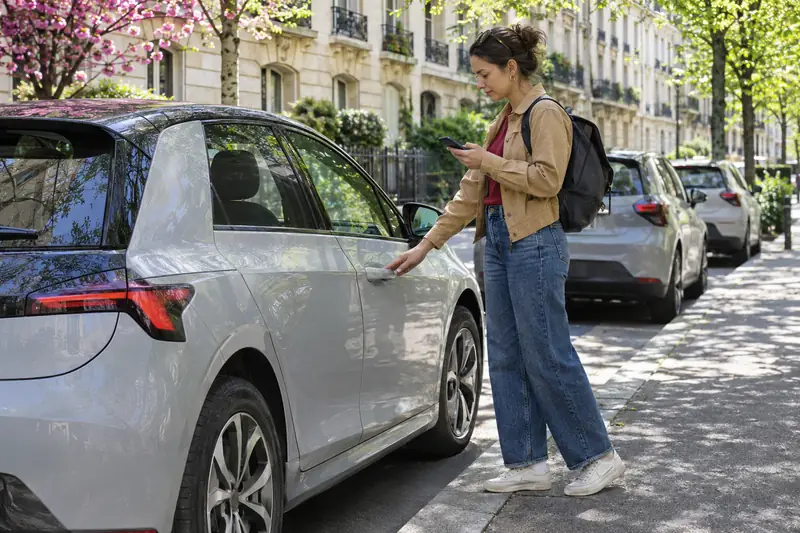
In Marseille, car sharing between individuals is an arrangement in which a car owner lends the vehicle to another private person in return for a payment, either through an online platform or through a direct agreement. It lets owners offset the cost of insurance, parking and maintenance, and it lets borrowers drive for a day or a weekend without buying a car. In a large port city where parking is scarce, the formula attracts both people without a car and households that own only one.
In Marseille, car sharing between individuals: why residents do it
Marseille is spread across hills, coast and dense neighbourhoods, and its public transport, with two metro lines, trams and buses, does not reach every beach, creek or village around the city. Residents who live near the Vieux-Port or in the northern districts often keep a car for those trips, but pay for insurance and parking during the many hours it is not used.
Lending it to a neighbour or a visitor brings back part of that outlay. For the borrower, the appeal lies in the choice of vehicles, from a small city car for narrow streets to a larger model for a family trip to Cassis, Aix-en-Provence or the Camargue.
The practice also suits students and newcomers who do not want to commit to a purchase while they settle in.
Platforms, car clubs and neighbour-to-neighbour loans
Three formats exist side by side, and the right one depends on how often you lend and how much protection you want.
- Online platforms list private cars, handle payment and usually include cover during each booking.
- Car clubs and cooperatives own the vehicles themselves and give members access with a card or an application.
- Direct loans between neighbours need a written agreement and a clear check with the insurer.
Platforms give the strongest framework for strangers, because the contract, the identity checks and the claims procedure are standardised. A direct loan is cheaper but depends entirely on trust. In a big city, where you may never meet the borrower again, many owners prefer the structure of a platform for every rental beyond a family circle.
Insurance and who pays for damage
The first question for any owner is whether the standard policy allows paid loans. Some insurers refuse to cover a vehicle that earns money, while others accept it with an extra option. A call or an email to the insurer settles the point, and the answer should be kept in writing.
During a platform rental, a separate policy generally applies, with an excess that the borrower may have to pay after a damage. The amount differs from one offer to another, so read it before you accept a booking.
Owners should also ask what happens to their no-claims bonus and how long a repair may keep the car off the road. If the car is financed or leased by its owner, the contract may restrict lending, which is another reason to check the paperwork first. Borrowers should keep every receipt and photograph after an incident.
Parking, traffic and local conditions
Marseille drivers face heavy traffic on the main motorways and in the centre, and finding a place for a car can take longer than the journey itself. A borrower should therefore ask where the car is parked, whether a residential space or a private car park is available, and what time it must be back.
Owners should warn borrowers about neighbourhoods where leaving valuables visible in a parked car is unwise, and about roads where a strong mistral wind makes high-sided vehicles harder to handle. Narrow streets in old districts call for a compact car.
In summer, access to certain natural sites near the city, such as the Calanques, can be restricted for cars during fire-risk periods, so check the rules before you plan a day out. Public transport and a short walk are sometimes the better option.
Setting a price that is fair to both sides
A fair price starts from the real costs of the vehicle: insurance, servicing, tyres, depreciation and parking. Dividing them over the days of use shows what a rental day costs the owner, and a margin for wear and tear completes the figure.
Most owners add a mileage limit with a price for extra kilometres, and ask for a deposit that is returned if the car comes back in the same condition. A short rental often costs less than a day with a traditional agency, which is one of the reasons the practice has grown.
Borrowers should check the total, including fuel, tolls and any service fee added by the platform. A low daily rate may hide a high commission or a strict mileage allowance that makes a long trip expensive.
Handing over the car and keeping proof
A clean handover protects both people. Meet at a place you both know, walk around the car and photograph every side, the wheels and the dashboard, noting the mileage and the fuel level. Both parties should confirm the condition in writing or in the application.
- Make sure the vehicle documents and the insurance certificate are inside the car.
- Explain any particular feature, such as an unusual gearbox or a sensor that beeps.
- Agree on the exact time and place of the return.
At the end, repeat the inspection with the same photographs. If a scratch or a noise appears, report it immediately. Evidence collected on the day allows the insurer to act quickly and avoids a dispute over who was responsible.
Declaring income from a shared car
Money earned from lending a car counts as income, and owners should keep a simple register of each loan, the price paid and the costs linked to the vehicle. Platforms often provide a yearly summary, which makes the declaration easier.
How the income is treated depends on the amounts and on how regularly the car is lent, so it is sensible to consult the official guidance or an adviser rather than to rely on assumptions. Splitting costs with a friend for a single trip is not the same as running a regular paid activity.
Keep contracts, receipts and messages in an organised folder. If an insurer or an administration asks a question months later, you will be able to answer with documents instead of memory.
Weekend trips and holiday periods
Demand for shared cars in Marseille peaks on summer weekends, during school holidays and around bank holidays, when people leave for the coast, the Luberon or the Alps. Owners who plan ahead can publish their availability several weeks in advance and often find that the best slots are taken early.
Borrowers should book early, confirm the pick-up time the day before and avoid the busiest hours on the motorways towards Aix-en-Provence and Toulon. A handover near a metro station is often easier than one in a crowded residential street.
Leaving the city in the middle of the afternoon on a Friday can double the length of a trip, so set the return time with traffic in mind. A late return is the most frequent source of complaints on both sides, and a short message when you are delayed is always appreciated.
Organisations offering shared cars in Marseille
- Getaround : A platform on which individuals rent their cars to other users who unlock them with a smartphone.
- Citiz : A cooperative network of shared cars with a local operator serving the Marseille area.
- Ubeeqo : A shared-car service with vehicles reserved by the hour or the day near stations and offices.
Further reading
- UFC-Que Choisir : A consumer association with practical guides on rentals, insurance and disputes.