
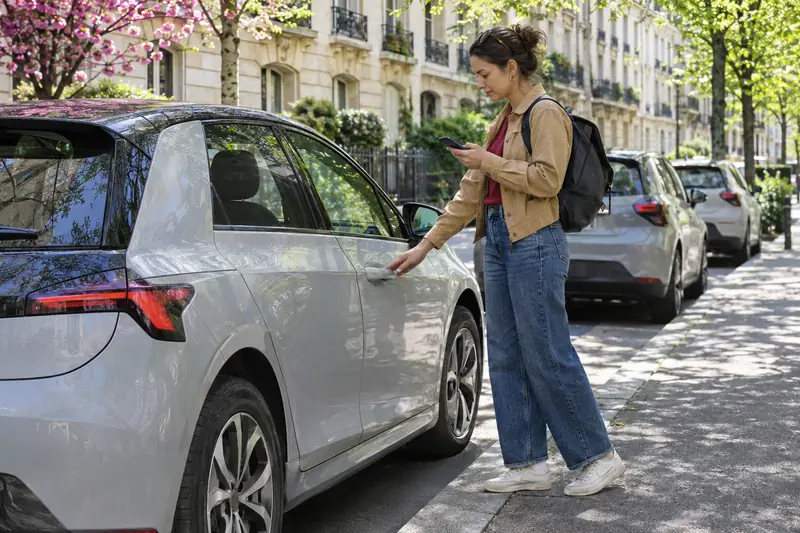
In Réunion, a monthly car subscription is a monthly rental in which a company provides a car, insurance and servicing for a fixed fee, with no purchase and no loan. On an island where public transport does not reach every valley or coastal town, a car is often necessary, and buying one can be costly. A subscription suits people on a work assignment, seasonal workers, students, new arrivals and visitors staying for several weeks or months, who want a reliable vehicle without long-term ties.
Why a monthly car subscription suits Réunion
Réunion has a coastal ring road, mountain routes and a limited bus network, so daily life often depends on a car. Importing and buying a vehicle is expensive, and resale values are affected by humidity, heat and salty air. A monthly rental lets you avoid these risks.
The formula also fits the rhythm of the island. Many people arrive for a contract of a few months, for a long family stay or for a work posting, and then leave. They need a car for exactly that period. Prices vary according to the season, with demand rising during school holidays and the austral summer, so booking early is wise.
Ask whether the offer is a true monthly arrangement or a daily rental with a reduced rate, because the conditions on mileage and deposit differ.
What is normally included in the monthly price
A typical package includes the car, civil liability insurance, maintenance, tyres and breakdown assistance. Comprehensive cover is sometimes included and sometimes optional. Fuel, parking, fines and damage inside the excess are your responsibility.
- Mileage: some offers are unlimited, while others set a monthly allowance.
- Excess: ask the amount and whether it can be reduced for a fee.
- Second driver: often possible for an extra sum.
- Child seats and roof racks: sold as options.
Remember that Réunion is part of France, so French insurance and traffic rules apply. Cars cannot be taken off the island, so the cover is for the island roads only.
Conditions to rent a car by the month in Réunion
You must hold a driving licence valid in France, with a minimum period of driving experience, often one to three years. Licences from the European Union are accepted. Licences from other countries are valid for a limited period for visitors, and the rental company may ask for an international permit or a translation.
Bring an identity document, proof of address, a bank card in your name and, for residents, sometimes a payslip. The deposit may be significant, and it is returned after the car is checked. Young drivers pay a supplement in many companies, and some set a minimum age of twenty-one.
Read the conditions on fines. Speeding fines and parking fines are passed on to the driver, with an administrative fee in some contracts.
Driving in Réunion: roads, weather and fuel
The coastal road and the main routes are well maintained, but mountain roads to the cirques are narrow, steep and winding, and rain or fog can reduce visibility. A small car with good brakes and a comfortable gearbox is often more practical than a large one.
The cyclone season, roughly from the start of the year to the end of the southern summer, may close roads and bring heavy rain. Follow the official alerts and avoid parking under trees or near ravines. Traffic around Saint-Denis, Saint-Paul and Saint-Pierre can be heavy at peak hours, so leave extra time.
Fuel prices are regulated, and stations are common near towns but rarer in the highlands. Fill the tank before a mountain trip.
Choosing between a monthly subscription and other solutions
A daily rental is practical for a weekend, but it becomes expensive over a month. A used car purchase is cheaper per month after a long period but exposes you to repairs, insurance and resale risks. A monthly subscription lies in between, with a predictable bill.
Consider your exact period of stay. For one to three months, a monthly rental is almost always simpler. For six months or more, ask for a quotation for a longer term, because the monthly price often drops. For a year or more, compare with the purchase of a second-hand car, including registration, insurance and the cost of selling it.
Also think about the second driver. If a partner will drive, count the extra cost of adding them to the contract.
Booking tips and traps to avoid
Compare at least three companies, and ask for a written offer showing the monthly price, the deposit, the mileage, the excess and the exit conditions. Avoid paying a large non-refundable advance. Verify that the car delivered is the model on the quotation, or an equivalent, and test the air conditioning, the lights and the tyres.
Take dated photos of the exterior, the interior and the mileage when you collect the car. Do the same when you return it, and ask for a signed return report. Many disputes concern small scratches, so documentation is your best protection.
If you plan to leave early, read the cancellation clause before you pay, because some contracts require notice of a month.
Parking, tolls and everyday costs
Parking in the main towns is mostly paid in the centre and free in many residential streets, while beaches and popular trailheads can be crowded on weekends. There are few motorways in the French sense, so tolls are rare, but road works can add time.
Budget for fuel according to your distance. A round trip between the north and the south of the island can use a significant amount, and mountain driving consumes more. If you choose an electric car, check the charging stations near where you live and work before you commit, because the network is smaller than on the mainland.
Electric, hybrid and small cars on the island
Choose the car for the roads you will use. A small or medium hatchback is easy to park in Saint-Denis, Saint-Pierre or Saint-Gilles and uses less fuel on coastal routes. A higher car with a stronger engine helps on mountain climbs to places such as Cilaos or Salazie.
Electric cars are growing in number, and some companies offer them by the month. Their advantages are quiet driving and low running costs, but you must know where to charge. Ask whether the rental includes a charging card, whether your home or workplace has a socket you can use, and what the real range is on steep roads, where consumption rises on the way up and falls on the way down.
Whatever the model, check the spare wheel and the jack before leaving the agency. Tyre punctures are not rare on rural roads, and knowing that the equipment is in the boot saves time and stress.
Monthly car rental and subscription companies in Réunion
- ADA : A French rental company with branches on the island, offering long-duration rental.
- Rent A Car : A rental network with agencies in Réunion and monthly or long-duration formulas.
- Jumbo Car : A local car rental company in Réunion with a range of vehicles.
Further reading
- Île de La Réunion Tourisme : The island's tourism board, with practical information on getting around and driving.