
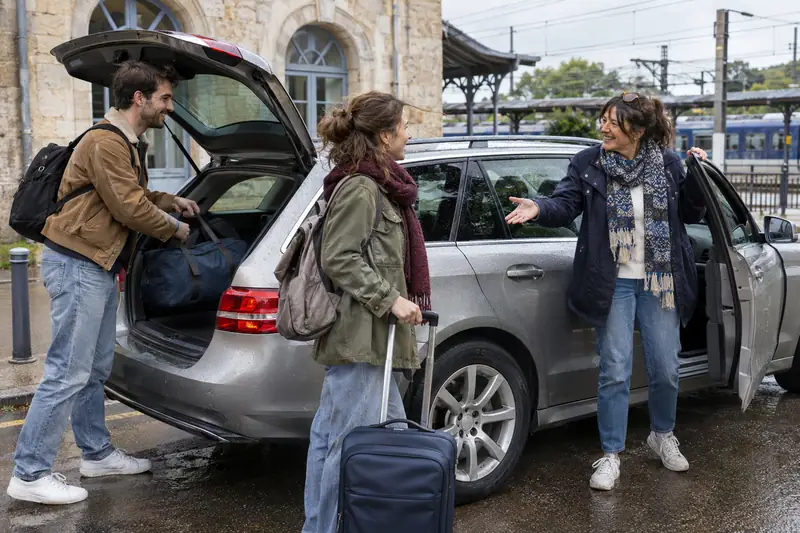
In Switzerland, trailer sharing between individuals is the lending or renting of a trailer by its owner to another private person, for example for a house move, garden waste, bikes, a boat or a camping trip. It spares people from buying and storing a trailer that they rarely use. The two parties agree on price, dates, deposit and use, often in writing or through a platform. Swiss rules on licences, weight, registration and insurance are precise, so check them before you tow, particularly on mountain roads.
Trailer sharing between individuals in Switzerland: the basics
Swiss households and businesses often own trailers for garden work, leisure and transport, and many are available to lend or rent. Offers appear on classified sites, local groups and platforms, and sometimes on noticeboards in shops.
- Define your load, its weight and the route.
- Choose the trailer type: open, box or special models for bikes and boats.
- Agree on dates, pick-up place and return time.
- Ask whether straps, ramps or a tarpaulin are provided.
A short meeting beforehand lets you check the trailer's condition and the hitch and practise coupling. Take your time. A calm handover prevents most mistakes.
Swiss cantons and municipalities may have their own rules for waste, parking trailers on public roads and storing them, so ask locally if your use is unusual.
Licence and weight limits
In Switzerland, the licence needed depends on the total weight of the combination and the trailer's authorised mass. A standard category B licence covers light trailers within set limits, while heavier combinations require an additional category or code. Check the details before towing.
- Check the towing capacity in your car's papers.
- Look at the trailer's maximum authorised weight.
- Check the required brake type for the trailer's weight.
- Do not exceed the permitted weight of the load.
If you plan to cross mountain roads, take extra care: gradients put more strain on the car and brakes. Ask a garage or the licensing office of your canton if you are unsure about the rules.
Keep a note of the weights you have checked, so that you can show them if the police ask.
Registration, plates and inspection
Trailers on Swiss roads must be registered and carry a plate according to the cantonal vehicle office. The owner has to keep the vehicle papers up to date and arrange for periodic inspection.
- Ask for a copy of the registration papers.
- Check that the plate matches the documents.
- Check the date of the last inspection, if applicable.
- Carry your licence and the car's documents.
Do not accept a trailer without proper papers. Swiss police checks are thorough, and a missing plate or an invalid inspection can lead to fines and trouble with insurers.
Ask whether the trailer has a recent inspection sticker or certificate, and note its date in your agreement.
Insurance and liability
Insurance for trailers in Switzerland is linked to the registration. In many cases, liability insurance covers the trailer through its own policy, and your car insurance matters as well. The details depend on the insurer.
- Ask the owner for proof of liability insurance for the trailer.
- Ask your own insurer whether towing a borrowed trailer is covered.
- Put into writing who answers for damage or theft.
- Check whether comprehensive cover exists for the trailer.
Keep written answers from insurers. If you are unsure, a quick call can save a lot of money and stress after an incident.
If a platform arranges the loan, ask what protection it offers and whether it is valid in your canton.
Prices, deposits and agreement
Because prices in Switzerland are high, borrowing from a private person is often much cheaper than renting from a company. Some owners ask a modest fee or a small thank-you, while others charge a daily rate. A deposit is common and should be defined in writing.
- Record the fee, the deposit and the date of return.
- List equipment and condition with photos.
- Agree on cleaning, late return and fuel costs for the towing car.
- Specify forbidden uses, such as carrying hazardous goods.
Compare the price with a commercial rental, which includes more support and clear conditions. If your load is heavy or the trip is long, the extra security can be worth the money.
Because Swiss prices are high, a fair arrangement between neighbours often works well, but only if both sides know what has been agreed.
Loading and driving in Swiss conditions
Load the trailer carefully and secure the cargo with straps. Heavy items belong over the axle. Check lights, brake lights and indicators with the car before leaving, and verify the pressure of the tyres.
- Respect the speed limits that apply to cars with trailers.
- Use a lower gear on long descents to protect the brakes.
- Allow more distance and plan overtaking carefully.
- Check mirrors and extend them if needed.
Winter brings snow and ice, so avoid towing in poor conditions if you are not experienced. Some mountain passes restrict trailers, so check road information before you set off.
Check that your hitch ball is clean and greased lightly, and that the safety cable is attached before you drive off.
Everyday cases: moves, waste, leisure
Typical uses in Switzerland include moving flats, taking green waste to collection points, transporting bikes to trailheads, carrying a boat to a lake and loading camping gear. Each use has its own details.
- For waste, ask your municipality about collection rules and fees, which can vary.
- For moves, protect items and tie everything down firmly.
- For bikes and boats, use proper fixing systems.
- For camping, check the weight of the full load.
Plan your timing around opening hours, since many shops and collection points have limited hours, particularly on Saturdays and Sundays.
Weigh a heavy load before you leave if you have access to a scale, for example at a recycling site.
Handling problems and disputes
If something breaks or an accident occurs, stop safely and secure the area. Call emergency services if needed, note the details and photograph the scene. Inform the owner and the insurers promptly.
- Do not repair the trailer without the owner's consent.
- Keep invoices, messages and photos.
- Return the trailer as agreed and be open about damage.
- Seek advice from a consumer organisation if you cannot agree.
Clear communication and a written agreement solve most disagreements. Respect for the owner's property is at the heart of every successful sharing arrangement.
If the trailer is damaged through no fault of your own, for example by another vehicle while parked, report it to the police and to the owner without delay.
Trailer sharing organisations in Switzerland
- Ricardo : A Swiss online marketplace where individuals advertise trailers for sale or rental.
- Tutti.ch : A Swiss classifieds platform with trailers offered by individuals.
- Mobility : A Swiss car sharing cooperative that offers vans and transport vehicles for short rentals.
- Anibis : A Swiss classifieds site with listings for trailers and vehicles.
Further reading
- Touring Club Switzerland : A Swiss mobility organisation with advice on towing, road safety and vehicle rules.