
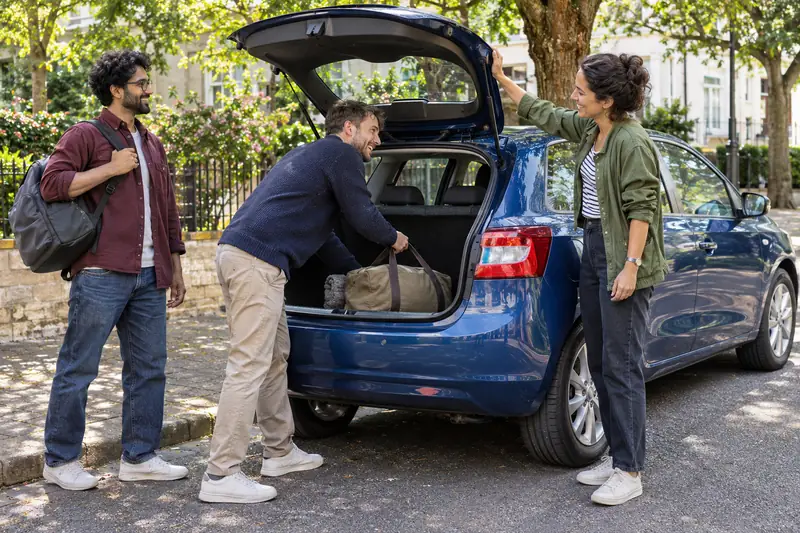
Sharing a car with friends means that two or more people use one vehicle by turns and divide the costs among themselves, whether they bought it together or one of them owns it. It suits people who need a car a few days a week or only for certain trips. Done well, it saves a lot of money and keeps friendships intact because everyone knows what to expect from the start, and because cars, calendars and costs are managed with the same discipline as any shared resource.
Is sharing a car with friends right for you?
Before you start, be honest about how each person uses a car. Someone who commutes every day needs the vehicle at fixed hours, while another may need it only at weekends or for shopping. If your needs clash at the same times, sharing will cause constant tension, whatever the goodwill.
Think also about habits. A person who is careless with fuel, late for handovers or untidy in the car will test the patience of the group. It helps to talk about the use you expect, the distances, the number of people involved and the places where the car will be kept.
Groups of two or three work best. Beyond four people, booking becomes difficult and the cost per person may not drop much further, since insurance and maintenance rise with use.
Who owns the car and who pays what
There are two main models. In the first, one friend owns the car and the others pay a share of the costs and a fee for use. In the second, everyone owns a part and costs are split according to those parts. Each has consequences for insurance, for registration and for what happens if someone leaves.
Costs include fixed items, such as insurance, tax, parking and depreciation, and variable items, such as fuel, tyres, servicing and tolls. A simple method is to split fixed costs equally and variable costs by kilometres driven, recorded in a notebook or a shared spreadsheet.
- Open a joint account or use a shared payment application for common expenses.
- Settle accounts every month.
- Keep a small reserve for repairs.
Transparent numbers prevent resentment more than any other rule.
Booking the car without conflict
A shared calendar is the best tool. Each person enters their trips, and the rest of the group can see when the car is free. Agree on a notice period, such as two days for a weekend, and on the way to handle conflicts. Some groups give priority to work and medical needs, others rotate the weekends.
Set limits on long trips. A holiday of two weeks needs a plan agreed well ahead, and the person using the car for that period may pay an additional amount or share the cost of servicing afterwards.
- Agree where the keys are kept and how they are handed over.
- Decide what happens if someone returns the car late.
- Write down how to cancel a booking.
A little discipline in the calendar saves many arguments over misunderstandings.
Insurance and friendly lending
The insurer should know that several people will drive the car. Some policies name one driver and exclude others, while some accept occasional drivers or allow a list of named drivers. Ask for the cover in writing and ensure that each friend holds a valid licence.
Think about the excess. If someone damages the car, who pays the amount that is not covered? Many groups decide that the driver pays the first part up to a fixed sum and that the group shares the rest. Others keep a reserve fund for this purpose.
Remember that a no-claims bonus belongs to the policy holder. If an accident occurs, the bonus of the owner or the person who holds the contract may be reduced, so the group should discuss compensation in that case. A small clause can prevent a major disagreement.
Maintenance, cleanliness and small rules
The car must be looked after as if it belonged to each person. One member can take charge of the service schedule, another of the technical inspection, and a third of the tyre pressure and the fluids. Share the tasks and note each action in a logbook.
Everyday rules are surprisingly important. Return the car with at least a given fuel level, remove rubbish, and leave the seat and mirrors close to the position of the previous driver, or adjust them without complaint. Decide whether smoking, pets and food are allowed.
Report faults at once. A warning light that is ignored may lead to expensive damage and unfairly penalise the next driver. A group chat is a convenient place to share photographs and notes, and it keeps a record of what was said and when.
Fines, accidents and what to do
Fines are an unpleasant subject but worth discussing early. Agree that the person who was driving pays, and that the owner or the registered keeper provides the information needed to identify the driver by the legal deadline. Keep a copy of the booking calendar to show who had the car.
In the case of an accident, the driver must stay calm, make the area safe, call the emergency services if necessary and complete the report with the other party. Take photographs and inform the owner at once. The declaration to the insurer must be made within the contractual period.
Put the insurer's number, the report form and the group's agreement in the glovebox. Preparation reduces stress on the day and helps everyone act in the same way.
Leaving the group or selling the car
Friendships change, and a sharing arrangement can end for good reasons: a move, a new job, a baby or simply a change of habits. Decide at the beginning how much notice is needed to leave and how a departing member is compensated.
If the car is owned jointly, an estimate of its value can come from a published price guide or from a professional. The remaining members may buy the share of the person who leaves or sell the car and divide the proceeds. If one person owns the car, the others simply stop paying and may recover part of any reserve fund.
Put these points in a short agreement signed by everyone. It may feel formal between friends, but it protects the friendship in the moments when it is most tested.
A short example of a working arrangement
Imagine three friends who live in the same neighbourhood and buy an older hatchback together. Each pays a third of the purchase price and a third of the fixed costs. They keep a notebook in the glovebox where each driver writes the odometer reading before and after every trip, and at the end of each month they divide the fuel and servicing costs according to the distance driven.
They use a shared calendar and agree that bookings made at least two days ahead have priority. If two people want the car for the same weekend, they alternate. Every six months, they meet for a drink, review the costs and decide whether the arrangement still suits them.
This is not complicated, but it works because the rules are visible and everyone follows them. The same principles apply to a larger group or to a car that belongs to only one of the friends.