
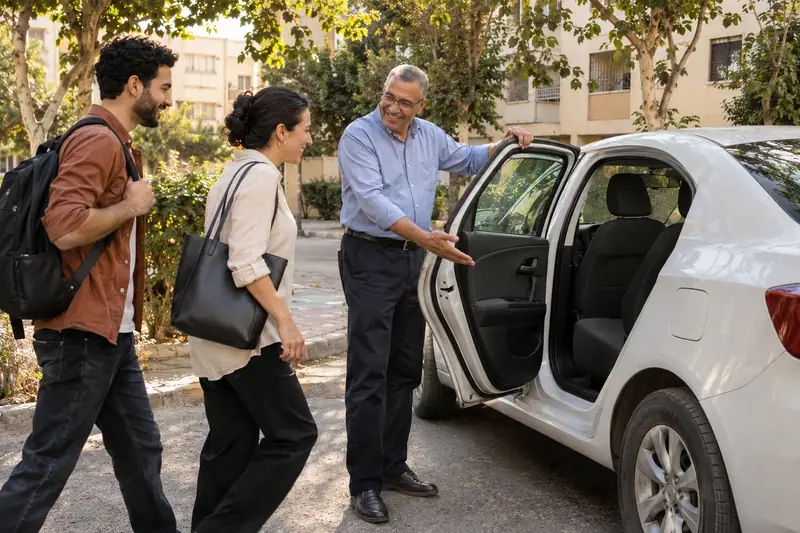
In Nice, car sharing between individuals is a practice in which a private owner lends a car to another person for a fee, using an online platform or a direct arrangement. It helps owners absorb the cost of insurance and parking, and it gives residents, students and visitors a vehicle for a few hours or days. On the French Riviera, where narrow streets, steep hills and costly parking make driving a constraint, it works best for trips that public transport covers poorly.
Why the formula fits the Riviera
Nice has a tram network, a busy bus service and a regional train line along the coast, so many everyday journeys can be made without a car. Yet the hills behind the city, the villages of the hinterland, the ski resorts of the Alpes-Maritimes and the neighbouring towns of Cannes, Antibes and Menton are not always easy to reach by public transport.
Owners who live in the centre often pay a lot for a parking space and use the car rarely. Lending it for a day or two reduces that burden. Visitors who arrive by plane or train and want freedom for a few days find that a private car can be cheaper and more flexible than a traditional rental at the airport.
Car sharing between individuals in Nice: the main formats
Three formats coexist. Online platforms put owners and borrowers in contact, take payment and give a contract and cover for each booking. Car clubs or cooperatives own the vehicles and let subscribers book them for short periods. Direct agreements between friends, neighbours or colleagues need a written note and careful insurance checks.
- Platforms are best for strangers, because identity checks and a claims process are included.
- Clubs suit people who need a car at regular times.
- Direct loans work when trust already exists.
Before choosing, compare commissions, deposits, mileage limits and the amount of the excess. Look also at how each option treats cancellations, which can be frequent in the holiday season when plans change quickly.
Insurance and responsibility
No owner should lend a car without knowing how the insurer treats the situation. Ask whether the policy allows drivers other than those named, whether it covers paid loans and what the impact would be on your bonus after an accident. Obtain the answer in writing.
Platforms generally supply a policy during each rental, with an excess that the borrower may have to pay for a damage. Check the exclusions, such as driving on certain roads, and the time you have to report an accident.
Drivers who intend to cross the border into Italy, which is very close, should tell the owner and verify that the cover extends abroad. Take photographs of the car before and after the trip, and keep the vehicle documents in the car at all times.
Driving and parking in Nice
Streets in the old town and on the hills are narrow, and parking spaces are scarce and expensive. A small car is usually the better choice, and borrowers should ask the owner where the vehicle is parked and how to enter and leave the car park.
The Promenade des Anglais and the main access roads become congested in summer and during events such as the carnival. Agree on a return time that avoids the busiest hours, especially if the borrower must catch a flight at Nice Côte d'Azur airport.
Roads in the hinterland and towards the mountains are winding. Borrowers who are not used to them should drive carefully and check fuel before leaving the coast. A shared car that is returned with a full tank and without scratches earns trust.
What a shared car should cost
Work out the true yearly cost of the vehicle, including insurance, servicing, tyres, depreciation and the parking space. Divide that sum by the number of days the car will be lent to reach a daily figure, and add a margin for wear. Many owners also set a kilometre allowance and a price for extra kilometres.
In a tourist city, prices vary according to the season and the demand, but an owner should not lose sight of the actual costs. Borrowers should add fuel, tolls, parking and any platform fee when they compare offers.
If the total approaches the price of a traditional rental, the advantage of the shared car must come from convenience: a pick-up close to home, a model that fits a group or a luggage-heavy trip, or a more flexible schedule.
Handover, checks and return
A thorough handover limits disputes. Meet at a place you know, inspect the car together, take photographs of all sides and the interior and record the mileage and fuel level. Make sure that the documents, a warning triangle and a high-visibility vest are on board.
- Explain any specific feature of the car.
- Write down the agreed return time and place.
- Photograph the car again at the end.
- Report any damage immediately through the platform or in writing.
When the car is opened by smartphone, test the application before the owner leaves or before you move away from the meeting point. Many problems come from a failing connection or a forgotten password, and they are easy to avoid with a quick check.
Declaring and recording income
Anything earned from lending a car should be recorded. Keep a list of each booking, the amount you received, the platform fee and the expenses linked to the vehicle. Annual statements from the platform will help you keep accurate records.
How the income is taxed depends on the amounts and on how often the car is lent. Consult the official explanations or an adviser before deciding how to declare it, and do not assume that small amounts are automatically exempt.
Keep the correspondence with your insurer and the contracts for each rental. This file protects you if a borrower claims that something happened during the loan and it helps you answer any request for information in a precise and calm way.
Visitors and short stays
Tourists and business travellers form a large share of borrowers in Nice. Many arrive without a car and discover that public transport is excellent along the coast but less convenient for the hinterland, where hill villages and viewpoints lie out of reach of the trams.
A visitor who borrows a private car should bring a valid licence, a bank card for the deposit and the booking confirmation. Owners should explain clearly how to reach the car, how the parking works and what to do in an emergency, preferably in writing and in more than one language.
Foreign drivers should also remember that traffic rules, such as priority from the right at some junctions and speed limits, may differ from those at home. A short briefing at handover is a sign of professionalism and reduces the risk of accidents.
Organisations offering shared cars in Nice
Further reading
- UFC-Que Choisir : A consumer association offering advice on rentals, insurance and disputes.