
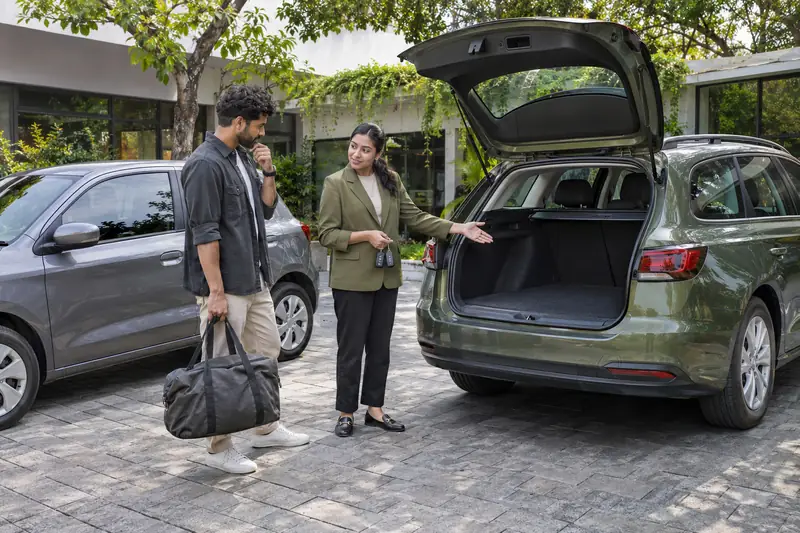
In Cologne, a monthly car subscription is a flexible rental that bundles the car, insurance, vehicle tax and servicing into one monthly payment, without a purchase or a loan. Contracts often run from one month to two years, with a notice period for ending them. The formula suits people who commute across the Rhineland, newcomers who have just started a job in the city, and households that wish to try a hybrid or electric car before deciding on a longer commitment.
A car in Cologne: when it helps and when it does not
Cologne has a good tram and light rail network run by the local transport company, regional trains to Düsseldorf, Bonn and Aachen, and a dense cycling network in the inner districts. Many residents manage without a car during the week.
A car becomes useful for journeys that public transport serves poorly: the Eifel, the Bergisches Land, night shifts, large shopping trips or visits to relatives in smaller towns. The monthly formula gives access to a vehicle for those cases without the full cost of ownership.
If you work in an industrial area outside the centre or at a site that trains do not reach, a subscription may even replace a second household car. Think about the weekly pattern before signing, because a car that stays parked for days still costs the same monthly fee.
What a monthly car subscription costs in Cologne
The fee depends on the model, the contract length and the distance allowance. Small petrol cars cost less than electric estates, and a longer term lowers the monthly amount. Promotions with a reduced first month may exist, but the later price is what counts.
- Compare the same term and the same yearly distance across offers.
- Ask for the excess in case of damage and the cost of reducing it.
- Add parking, fuel or charging, and any garage you rent.
- Ask whether delivery in Cologne is free or charged.
For occasional trips of a few hours, a car sharing membership or a rental by the hour may be cheaper than any monthly plan, so test your own usage first.
Traffic, bridges and the environmental zone
Cologne's traffic is shaped by the Rhine. The few bridges carry heavy flows, and works or accidents on a crossing can add long delays, especially at rush hour. Plan alternative routes and check traffic information before leaving for the airport or the trade fair grounds.
The city has an environmental zone that requires a green sticker. Subscription cars normally carry it, but verify at handover. Large events, such as the carnival procession and football matches, close streets and fill car parks, so public transport is often easier on those days.
Motorways around the city, including the ring roads, are busy, and speed limits apply in many sections. Drive with care and keep a safe distance in dense traffic and in construction zones.
Parking and residents' permits
In many districts, street parking is paid and residents may apply for a permit that allows them to park near their home. Demand in areas such as the inner city and popular neighbourhoods is high, and finding a space in the evening can take a while.
A garage space is a sensible option if you plan to keep the car for several months. Ask whether your landlord has one, or look at nearby car parks with monthly rates. A subscription does not include a permit, and because the car belongs to the provider, ask for a letter confirming that you are its regular user when you apply to the city.
If you cannot find a place to park, a cheaper way to have a car is to reduce the term and rely on shared mobility for most trips.
Conditions: licence, age and credit
You need a valid driving licence and an identity document, a bank account in Germany or the euro area and a registered address. Licences issued in European countries are valid, while those from other countries are generally accepted for six months after you register, with exceptions depending on the country.
Providers set a minimum age, frequently twenty-one, and sometimes require a minimum period with a licence. Many check creditworthiness through a credit bureau. A deposit or a proof of income may be requested, particularly for a first application.
If you are a student or on a temporary contract, a letter from your employer or university can help. Prepare clear scans of your documents to avoid delays.
What happens in case of damage or breakdown
The contract explains whom to call. Most providers give a number for assistance, and some arrange a replacement car if repairs take long. In an accident, call the police if someone is hurt or if the other party refuses to share details, and note the names, plates and insurers involved.
Report the incident to the provider within the period set in the contract, since late reports may cause problems with the insurer. The excess applies to damage you cause, and in some offers a smaller excess is available for a monthly supplement.
For small scratches that you notice at the start, record them with photos and send them at once, so they are not attributed to you at the end.
Ending the subscription or changing cars
Before you sign, read the minimum term, notice period and early return rules. Some contracts let you leave after a few months with one month's notice, while others charge a fee. A swap to a different model can be useful when your family or job changes.
On return, the car is inspected, and normal wear is accepted. Dents, deep scratches, damaged wheels and interior stains are billed. Clean the car, bring all keys and papers, and check that the fuel or charge level matches the contract.
Ask for a signed return report. If the final invoice includes an item you do not understand, ask for the photos and the price list in writing.
Choosing between providers
Compare at least three offers, and give more weight to clear conditions than to the lowest advertised price. A provider that explains the deposit, the excess and the exit costs plainly is easier to trust. Check customer service hours, the nearest service point and the delivery time.
If you value flexibility, choose a short term even if the monthly fee is a little higher. If you are sure you will keep the car for a year or more, a longer term usually costs less per month.
Do not forget the practical side: confirm whether the provider offers a personal handover or only a key box, because a face-to-face handover makes it easier to point out existing marks and ask questions about the car's equipment.
Finally, ask how the company deals with complaints, and keep your messages with it in writing, so that any later disagreement can be settled quickly.
Monthly car subscription providers for Cologne
Further reading
- ADAC Nordrhein : The regional motoring club for the Cologne area, with advice on cars and assistance.