
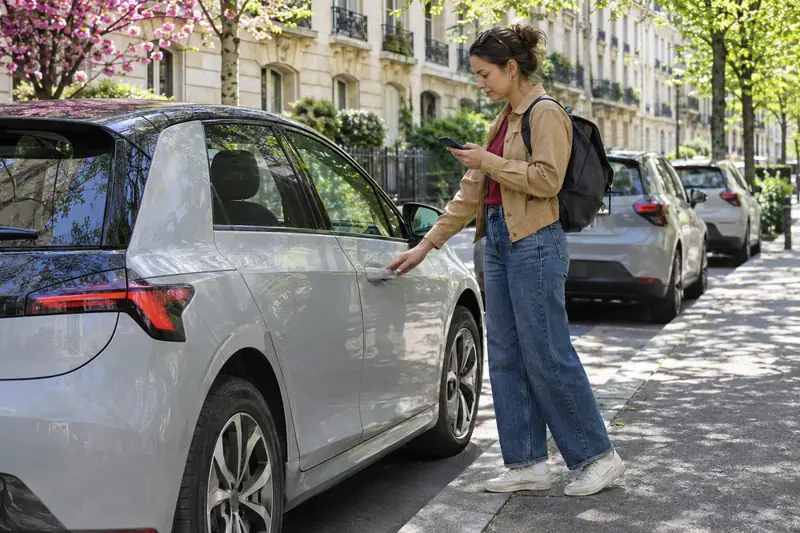
In Versailles, a monthly car subscription is a car rental paid month by month, with insurance and a fixed mileage included in one fee. The royal town west of Paris is well served by suburban trains, yet its research parks, military sites and surrounding forests extend beyond the station areas. A subscription gives a newcomer, a student or an engineer on assignment a car for a few months, with no purchase, and the vehicle goes back to the provider after the notice period in the contract.
A royal town that also works as a suburb
Versailles is known worldwide for its château, gardens and Trianon estate, which draw millions of visitors each year, but about eighty thousand people live there and many commute to Paris or to business parks around Saint-Quentin-en-Yvelines and Vélizy. The town is laid out around three great avenues, the Avenue de Paris, the Avenue de Saint-Cloud and the Avenue de Sceaux, which meet at the Place d'Armes in front of the palace.
This layout makes the centre elegant but congested. Tourist coaches, school groups and commuters share the same streets, and the Sunday market and the musical fountain shows add to the pressure in the warm months.
Three stations and the Paris connection
Versailles has three railway stations: Chantiers, Rive Gauche and Rive Droite. They link to Paris-Montparnasse, Paris-Saint-Lazare, Paris-Invalides by RER C, and to Saint-Quentin-en-Yvelines. The journey to the centre of Paris takes between twenty and forty minutes depending on the line.
For commuters, the train is usually the best answer. A car is mostly needed for the other legs of life: taking children to school in a neighbouring commune, shopping at a large store, reaching a client in an area with no railway, or driving at weekends to Normandy or the Loire. It is also useful when a family moves to the area and waits for a final purchase.
What a monthly car subscription in Versailles typically costs
Prices in the western suburbs follow Île-de-France levels, usually above those of smaller French towns. They depend on the model, the term and the mileage. Ask for several offers and compare them on the same basis.
- Included kilometres, relevant if you drive to Paris on certain days.
- Excess, important on crowded streets where scrapes are frequent.
- Delivery to the station, which saves a trip.
- Parking costs at your address, often the largest extra.
A longer commitment can lower the monthly price, but do not choose it unless your situation is stable.
Traffic and the low-emission zone in the Paris region
The town lies just outside the A86 ring, so some of its surrounding communes fall within the Greater Paris low-emission zone, while others do not. The rules use Crit'Air stickers and are tightened step by step. Ask for the sticker class of the exact car, and check whether your usual route enters a restricted area.
Traffic on the N12, the A13 and the roads around Vélizy is dense at peak times, and Friday evenings are particularly slow. Many drivers plan trips for early morning or after the evening rush. Satory and the nearby industrial areas also see commuter traffic.
Parking around the château and in residential quarters
Parking near the château is paid, and car parks at Place d'Armes and Notre-Dame market are busy at weekends. Residents of the Saint-Louis and Notre-Dame districts often have residential permits, which a rented car may not qualify for. Ask the town hall.
Free parking exists further from the centre, but time limits apply in many streets. If you live in an apartment, ask whether a space is included. Remember that visitors' coaches take up lots of space on Saturdays and Sundays, so leave the car in a car park when you plan a day out in the town.
Researchers, military staff and students
The area has a university, a large hospital, research centres on the Saclay plateau and military sites, notably at Satory. These institutions bring in people on temporary assignments, doctoral contracts and training programmes, many arriving from other countries without a vehicle.
A monthly rental fits a posting of three to twelve months. Prepare your documents, particularly your licence and your proof of assignment, and ask early whether the provider accepts a foreign licence. Some also ask for a French address, which can be a temporary one such as a hostel or a hotel.
Weekends beyond the town: forests, castles and Normandy
From Versailles you can reach the Rambouillet forest, the Chevreuse valley with its abbeys and the castle of Dampierre in about half an hour. Giverny, Chartres and the Normandy coast are within one to two hours. Many of these destinations are poorly served by public transport on weekends.
If you take a trip to Chartres or the Loire, check mileage limits, and plan fuel stops before leaving the motorways. Ask whether the contract permits towing, roof racks and bicycles, which are often restricted without prior approval.
Sunday evening returns along the A13 and the A12 are slow, so plan to come back before four or after eight in the evening.
Returning the car
Give notice in writing, agree on a time and clean the vehicle. Remove personal items, refuel if required and photograph all sides of the car.
Obtain a signed report and keep it until the deposit has been released.
Agencies near Versailles-Chantiers station are practical, because you can walk to the train for your last journey after handing over the keys. Check opening hours, since some branches close for lunch and on Saturday afternoons.
Plan the return so that you do not cross Versailles on a market morning. If you collect the car at the station, bring any suburban train pass you intend to use afterwards, so the last leg of your journey is easy.
Tourist seasons and the pressure on local roads
From April to October, the château and its gardens bring crowds, and the Grandes Eaux musicales, the fountain shows on weekends, increase the number of visitors further. Traffic around the Place d'Armes, the Avenue de Paris and the Rive Gauche station slows down, and parking space for private cars shrinks as coaches take over the kerb.
Residents often avoid the centre on those days and use the suburban train. If you drive, park in a car park on the edge of the central district and walk. A rental car that gets a parking fine near the château generates a charge from the company, so keep your ticket visible and read the signs about market days, which change the rules.
Choosing the right car for the western suburbs
A compact or hybrid car handles both the dense streets of the old town and the busy N12. Larger family cars suit weekend trips to Rambouillet or the Loire. Electric vehicles are well suited to short trips, and the Yvelines have a growing number of public charging stations, though home charging is more convenient.
Ask the agency which cable is supplied and whether a charging card is included, and check the range in winter, when it can drop by a quarter or more. A car with a rear camera is useful for tight parking in older apartment blocks.
Rental companies to compare around Versailles
- Drivalia : Offers subscription-style car rental in France; ask about pick-up points in the Yvelines.
- ADA : Rents cars and vans by the day or the month through agencies in the western suburbs.
- Ucar : A rental brand with local agencies where longer hire periods can be arranged.
- Hertz France : Provides rental cars with extended-term options, including near the stations.
Further reading
- Transilien suburban trains : Timetables and fares for the trains linking Versailles to Paris and the western suburbs.