
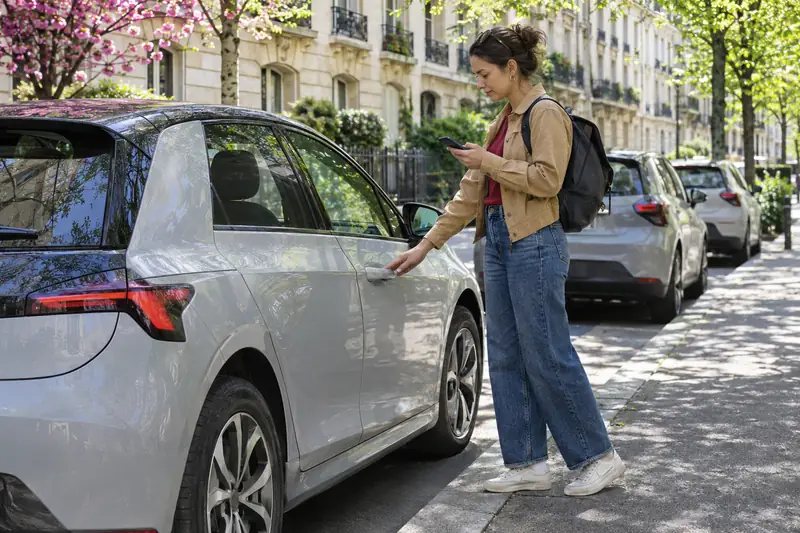
In Karlsruhe, a monthly car subscription is a flexible rental in which one payment per month covers the car, insurance, vehicle tax and servicing, without buying the vehicle or taking a loan. Terms are usually short, from a month to about two years. It suits students and researchers at the university and the technology institute, employees of the many companies in the region, and families who live on the edge of the city and want a car without the cost and paperwork of ownership.
Mobility in Karlsruhe and the case for a subscription
Karlsruhe is known for its tram-train system, which carries passengers from the city centre to towns in the surrounding region, and for a strong cycling culture. A large share of residents therefore live well with few car trips.
The region is nonetheless spread across the Rhine plain, the Black Forest edge and the Palatinate, and some destinations, such as villages in the hills, industrial zones and the border with France, are easier to reach by car. A monthly subscription can fill that gap without the heavy fixed costs of buying a car.
It also suits people who stay only for a limited period, such as visiting researchers, interns and project staff. They get a car for a few months and give it back without needing to resell it.
What is included in the monthly price
The monthly payment typically covers the car, comprehensive insurance, vehicle tax, servicing, repairs for normal wear and assistance. Some providers add delivery, and many include winter tyres in the cold months.
- Left to you: fuel or charging, parking, tolls and fines.
- Limited: yearly or monthly kilometres, with an extra charge beyond them.
- Variable: the excess, extra drivers and fees for early return.
Karlsruhe lies close to Alsace, and many residents drive to Strasbourg for shopping and leisure. Check that your contract authorises driving in France, and whether a special fee or a notice period applies for stays abroad.
What a monthly car subscription in Karlsruhe costs
Costs rise with the size and equipment of the car and fall with the length of the term. Small petrol and hybrid cars are the cheapest, while electric and premium models are priced higher. The kilometres you choose influence the fee as well, so estimate your annual distance honestly.
Request quotations with the same conditions from several providers and compare the total over the same period, including any delivery or deposit. Ask also about the cost of insurance for drivers under twenty-five, which may be higher.
Students may find that a car sharing membership with a local cooperative costs far less if they drive a few hours per month. A subscription becomes worthwhile when you need a car several times each week or at fixed hours.
Traffic, the Rhine bridge and the environmental zone
Karlsruhe has an environmental zone that requires a green sticker, and cars from subscription fleets normally carry it. The city's main roads can be congested at peak hours, and the crossing of the Rhine towards Rhineland-Palatinate is a well-known bottleneck, particularly when there are roadworks.
Tram lines run through the centre, and drivers must give them the right of way and avoid stopping on the tracks. Pay special attention in the pedestrian zone, where only certain vehicles are allowed.
If you commute to the Black Forest in winter, check the weather forecast and make sure the car has suitable tyres. Snow can appear quickly in the hills even when the city itself is clear.
Parking and shared mobility
Parking in the centre is paid, and many districts have residents' zones where permits are issued by the city. Garages and car parks offer monthly rates. A subscription does not include a permit, so ask your provider for a letter confirming that you are the regular user if the city requires it.
Karlsruhe has a well-known car sharing cooperative and several rental points, so you can combine a smaller subscription with shared cars for particular trips, for example when you need a van to move or a larger car for a family visit.
This mix can reduce the annual distance you need from your subscription, and thus the monthly price, while still giving you a car whenever you need one for daily life.
Licence, age and credit checks
You need an identity document, a driving licence, a bank account and an address in Germany. Licences from European countries are valid. Others are usually accepted for the first six months after you register, then must be exchanged, depending on the country of issue.
The usual minimum age is twenty-one, and drivers under twenty-five may face a supplement. Providers normally check credit status, and they may request a deposit or proof of income. Students and newcomers can often supply a study certificate, an employment contract or a scholarship letter.
Keep your documents in clear scans, and fill in the form with the same spelling as on your identity card. Small mismatches can delay approval by several days.
Ending the contract and handing back the car
Read the minimum term, the notice period and the early return conditions carefully. Some contracts allow a switch of model, and a few provide a pause for long absences, but these features differ between companies.
At the return, an inspector records the condition of the car. Take dated photographs of the body, wheels, interior and dashboard, and bring all keys and papers. Normal signs of use are accepted. Dents, deep scratches, tyre damage and heavy stains are charged at the rates in the contract.
If a fine reaches the provider, it is passed on to you, often with a handling fee. Keep an eye on your emails and post after the contract has ended, because late notices may still arrive.
Comparing providers before deciding
Look at the contract terms more than at the advertised price. A cheap fee with a big deposit, a high excess and costly extra kilometres may be worse than a more expensive but clearer offer. Check delivery times, customer service availability and the ease of getting a replacement car.
Ask what happens if you move away from the region before the end of the term, and whether the car can be returned at a different location. Get the final answers in writing.
It also pays to test the service before you rely on it. Send a question by email or chat and see how fast and how clearly the answer comes. A company that is slow before the contract is rarely quicker after it.
Check the reviews of independent consumer sites, but read them with care and look for repeated problems rather than single complaints, such as late deliveries, disputes over damage or difficulties in getting the deposit back.
Monthly car subscription providers and shared mobility for Karlsruhe
- Sixt+ : A subscription offer from the Sixt group with insurance and servicing included in the fee.
- FINN : A German digital provider of monthly car subscriptions with delivery.
- stadtmobil Karlsruhe : A local car sharing cooperative, useful for occasional trips beside or instead of a subscription.
Further reading
- ADAC Nordbaden : The regional motoring club for the Karlsruhe area, with advice on vehicles and assistance.