
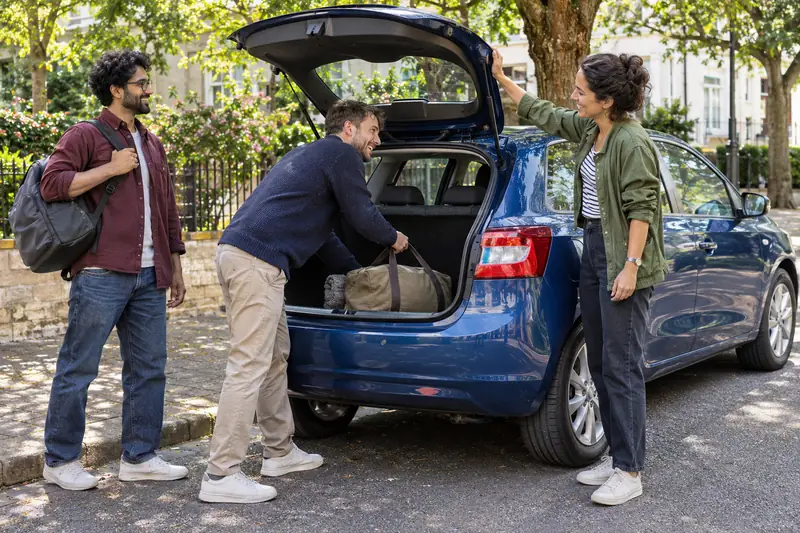
In Montreal, car sharing between individuals means that someone who owns a car lends it to other people for a few hours or days, typically through an online platform or a neighbourhood network, and receives a payment or an exchange of services. It offers car access to residents who do not own a vehicle and helps owners cover the cost of insurance, parking and maintenance. Clear rules on insurance, fuel, cleaning and return times keep the exchange reliable for both sides.
Why lending and borrowing cars suits Montreal
Montreal is a dense island city where many households live without a car, relying on the metro, buses, bicycles and walking. Even so, occasional needs arise: a trip to the Laurentians, a visit to a family member in the suburbs, a large purchase or a move. Renting from a traditional agency can be costly and impractical for a few hours. A neighbour's car, available nearby, solves the problem.
- Owners reduce the cost of keeping a rarely used car.
- Borrowers pay only for the time they need.
- Fewer privately owned cars means less parking pressure in crowded boroughs.
These advantages are strongest in neighbourhoods such as the Plateau, Rosemont and Villeray, where street parking is limited.
Platforms and neighbourhood networks
Several types of organisation exist. Commercial peer-to-peer platforms list private vehicles, handle payments and offer insurance during the rental. Local cooperative or community platforms allow neighbours to lend tools, bicycles and cars within a limited area, often with a small fee or without money. Some borough associations and housing cooperatives also run their own systems.
When choosing a platform, compare the commission, the insurance included, the support in case of an accident and the number of vehicles available in your area. Look at reviews from other users, and confirm whether the system verifies identities and driving licences. For informal lending among friends or neighbours, it is wise to write down the terms and to check your own insurance policy before handing over the keys.
Insurance and legal context in Quebec
In Quebec, the public insurance plan covers bodily injury for road accident victims, but property damage and liability for damage to others depend on private insurance. A private owner who lends a car must check that their policy allows it, particularly if payment is involved. Platforms usually provide a policy covering the vehicle and the driver during the rental.
- Understand the deductible you would pay in the event of damage.
- Check the minimum age and experience required of drivers.
- Confirm whether the policy covers theft and glass breakage.
Lending a car for payment on a regular basis may be considered a business activity, with tax consequences. Seek advice from an accountant or the provincial tax authority if you plan to earn significant income from your vehicle.
Winter conditions and equipment
From December to mid-March, winter tyres are mandatory in Quebec, and owners should ensure that the car is fitted accordingly. Snow clearing, alternate parking rules and very low temperatures complicate daily use. A borrowed car should have a scraper, a brush and a charged battery, and the borrower should know how to use the defroster and the heating.
Street parking during snow removal is a particular challenge in Montreal. Signs indicate when the street must be cleared, and cars left there can be towed. Borrowers must read the signs carefully, and owners should explain the usual parking spots for the car. Agree in advance on who pays a ticket or a tow if it happens during the rental, and note this in writing to prevent disputes.
Prices and what to compare
Prices vary with the car type, the season and the duration. City cars are cheaper than vans, and weekends are often more expensive than weekdays. Some platforms offer hourly rates, others charge daily fees with a number of kilometres included.
- Compare the total with a professional car sharing service.
- Include fuel, parking and any mileage supplements.
- Check cancellation conditions and late return fees.
For short urban trips, public transport or a bicycle is usually the cheapest option. For trips outside the city, a borrowed car may be better value than a taxi or a rental company, especially if you need the car for a whole day. If you are an owner, consider your maintenance costs, depreciation and taxes before setting a price, to ensure that renting is really profitable.
Car sharing between individuals in Montreal compared with fleets
Montreal is home to one of the oldest car sharing services in the world, with fleets of vehicles parked in neighbourhood stations and, more recently, vehicles that can be left anywhere in a designated area. They are consistent, easy to book and well maintained, but their cars are of limited variety and may be unavailable at busy times.
A private network gives access to different car types, such as vans, minivans and sometimes electric cars, and allows more personal arrangements. On the other hand, quality varies from one owner to another, and handover requires coordination. Many Montrealers use both: a fleet for quick errands and a neighbour's car for trips with specific needs. Trying each option once helps you find the combination that suits your habits and budget.
Good practice for a smooth exchange
Inspect the car together or through photographs at the start and end of every rental. Note existing scratches, the mileage and the fuel level. Return the car clean, on time and with the same fuel or charge. Keep the interior free of smoke and strong smells.
- Message the owner if you will be late.
- Report any issue immediately, even a small one.
- Leave a fair review once the exchange is complete.
Owners should keep the car's documents, the insurance certificate and emergency contacts available inside. A friendly tone and prompt answers to messages create trust, and trust is the basis of every peer-to-peer system. In a city where neighbours often meet at the market or in the park, a good reputation travels quickly.
Safety, scams and what to avoid
Stay inside the platform for communication and payments. Beware of offers that ask you to pay by transfer outside the system or that seem unusually cheap. Check that the listing photos match the car you are meeting, and verify the number plate.
Do not lend your car to anyone whose licence has not been checked, and do not leave personal belongings inside. Borrowers should drive carefully on unfamiliar streets, where cyclists, construction zones and one-way streets abound. In case of an accident, call emergency services if necessary, exchange details, take photographs and contact the platform immediately. Good records protect everyone and enable a quick resolution of any disagreement.
Car sharing and mobility services in Montreal
- Communauto : Montreal-born car sharing company offering vehicles by the hour in stations and free-floating zones.
- Turo : Peer-to-peer platform where private owners rent out their cars to approved drivers.
- Locomotion : Community platform where neighbours in Montreal and other Quebec areas lend each other cars, bicycles and tools.
Further reading
- STM : Montreal public transport operator, useful for planning trips that combine metro, bus and shared cars.