
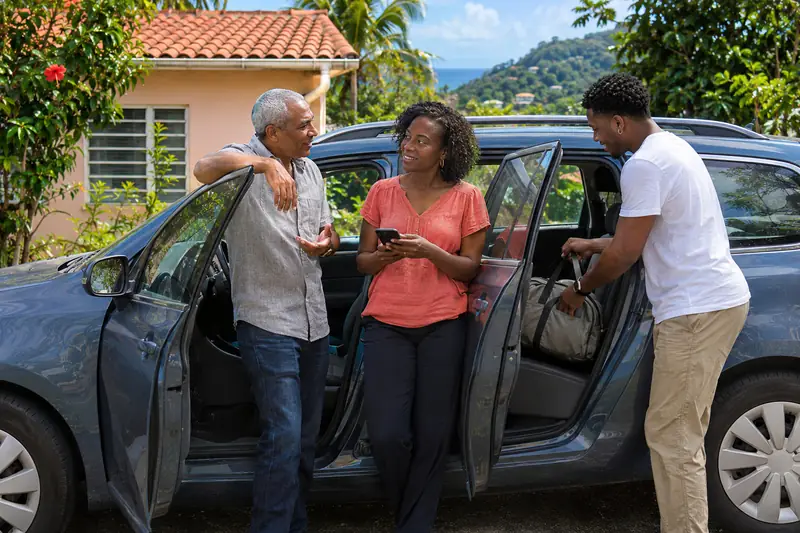
In Martinique, carpooling is the practice of sharing a private car journey between a driver and passengers who travel in the same direction and split the costs of fuel and parking. It is used mostly by commuters heading to Fort-de-France and Le Lamentin, where traffic jams are frequent, and by families and students across the island. Public transport is available but does not cover every route at every hour, so shared rides provide a useful, flexible and economical complement for daily travel.
Carpooling in Martinique and the traffic problem
Martinique has a dense network of roads concentrated around the centre of the island. The motorway between Fort-de-France, Le Lamentin and the north and south is the main artery, and it is regularly congested at peak times. Many of the island's jobs are located in Fort-de-France, Le Lamentin and nearby areas, while workers live in communes spread across the island.
The consequence is long queues and a high reliance on private cars, often with only the driver on board. Local media have reported that carpooling is advancing slowly, though several apps and employer initiatives exist and local authorities encourage the practice.
For commuters, the potential is real. A small group who live in the same area and work in the same zone can share a car and save fuel, parking and time, while contributing to fewer cars on the road.
Apps and local services
Local and national applications offer carpooling in Martinique. One example is Noula, an application presented by regional media as a way to match drivers and passengers on the island. National cooperative platforms such as Mobicoop are also available and allow you to publish regular rides without commission.
Employers and the authorities sometimes support carpooling by offering information, reserving parking or including it in mobility plans. The public transport network, which includes buses and a dedicated bus lane service around the capital, can be combined with shared rides for the first or last part of a journey.
Before registering, check the number of active members in your area, whether profiles are verified and how payments are handled. A service with many users on your route offers better chances of finding a match at the time you need.
Costs and sharing the bill
Costs include fuel, wear on the car and parking in town centres such as Fort-de-France, where spaces can be limited. Martinique has no motorway tolls, so the contribution mainly reflects fuel and parking.
A fair approach is to add up the costs of the round trip and divide by the number of occupants. For regular commutes, many groups agree on a monthly amount or alternate drivers each week. When one member lives farther away and the driver goes out of the way to collect them, a small supplement can be reasonable.
Always keep in mind that carpooling is not a way to make money. If the amount requested exceeds real costs on a regular basis, the activity could be treated as paid transport, which requires a licence. Clear, modest contributions protect everyone and keep the arrangement friendly.
Insurance, rules and safety
French rules apply in Martinique. Third-party motor insurance is compulsory, and it normally covers passengers. A driver who shares rides regularly should inform the insurer and keep the registration, insurance and inspection documents current.
Wear seat belts at all times, use proper child seats and avoid using a phone at the wheel. Speed limits and alcohol limits are checked by the police and gendarmerie. In the rainy season and during cyclone alerts, follow official warnings and avoid unnecessary journeys.
- Check the driver's identity before the first trip.
- Share the registration number with a relative.
- Agree on the meeting point in a well-lit, public place.
- Report any problem to the application you use.
A friendly, organised arrangement works best when everyone respects the same basic rules.
Commuting to Fort-de-France and Le Lamentin
The heart of the island's economy lies in Fort-de-France and Le Lamentin, where the airport, shopping centres, administrations and industrial areas are concentrated. Commuters from the north Caribbean coast, the Atlantic side and the south come from different directions, converging on the same road network.
A carpool meeting point near a motorway junction or a commercial centre can serve people from several communes. Colleagues who work in the same building or the same business area are natural partners. Employers can support them by offering priority parking and flexible hours.
When buses or other services are disrupted, as has happened during strikes, carpooling becomes one of the quickest alternatives and many people discover how convenient it can be. Groups that already exist are ready to absorb extra passengers when needed.
Students, hospitals and shift workers
The University of the Antilles in Martinique, the hospital in Fort-de-France and the island's other large employers have staff and students who travel at different hours. For shift workers, public transport may not match the early or late schedules, and carpooling with colleagues is a practical option.
Students who live far from the campus may share a car for the week, splitting fuel and parking costs. Groups of nurses or hospital staff often arrange rotating journeys that fit their schedules.
If you work in shifts, tell your group in advance about changes, and consider building two or three small groups for different timetables. Keep contact details up to date and share the plan in a message so that each person can see the days when they will be driving or travelling as passengers.
Leisure and weekend trips
Martinique's beaches, hiking trails, rum distilleries and the slopes of Mount Pelée attract residents and visitors alike. Parking is limited at some beaches, particularly at weekends and during holidays, and roads in the north can be narrow and winding.
Friends and families often travel together, which is a natural form of carpooling. When you meet people from different places, a meeting point outside the busy area and a single car for the final stretch can reduce traffic and parking problems.
For hiking, share the driving so that nobody is tired at the end of a long walk, and check the weather and trail conditions beforehand. After a day outside, a shared ride home is a good way to continue the conversation and divide the costs.
Making the arrangement last
Reliability is the foundation of any carpool. Respect the departure time, notify the group of absences and keep the car in good order. A simple rule about waiting time, such as five minutes, avoids resentment.
Discuss the practical points at the beginning: who pays what, how payments are made and what happens during school holidays and long weekends. Agree on topics such as smoking, music and eating in the car.
Review the arrangement after a month and adjust if necessary. If the group is successful, you will save money, reduce stress and perhaps make new friends. Keep an alternative in mind, such as the bus or a taxi, for days when the carpool cannot run, and welcome new members when seats are available.
Carpooling organisations in Martinique
- Noula : Carpooling application designed for drivers and passengers in Martinique.
- Mobicoop : French cooperative platform for commission-free carpooling, including rides in the overseas departments.
- Martinique Transport : Public transport authority of Martinique, with information on buses and mobility options that complement carpooling.
Further reading
- Collectivité territoriale de Martinique : Local authority with information on roads, mobility and transport policy on the island.