
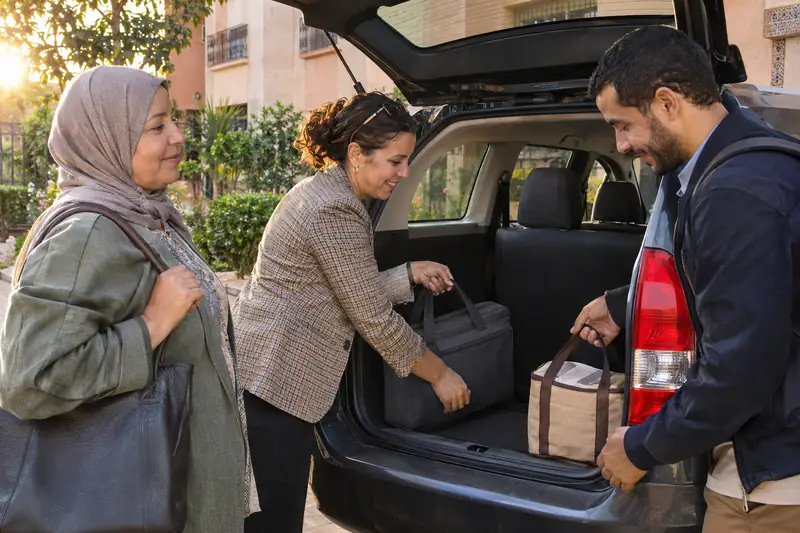
In Turkey, carpooling means that a driver who is making a journey, for example from Istanbul to Ankara, takes passengers heading the same way and shares the fuel and toll costs with them, while car sharing usually describes renting a shared vehicle by the hour or the day. Both ideas respond to high fuel prices, congested cities and long distances. They differ from taxis and ride-hailing, where the driver works professionally, and they rely on trust, clear payment and sound safety habits.
Carpooling and car sharing in Turkey: what is the difference?
The two expressions are often confused. Carpooling is a ride in the driver's own car, where passengers pay a share of the costs because they travel the same route. Car sharing refers to access to a fleet of vehicles that users book through an application, usually paying by time or distance, and drivers take the wheel themselves. Some people also use the term for lending a private car to neighbours or friends for a fee, an arrangement that raises specific insurance questions.
- Carpooling suits long trips and regular commutes.
- Car sharing suits occasional errands and short rentals.
- Ride-hailing and taxis are professional services with a licensed driver.
Choosing the right option depends on the number of travellers, the distance and how often the journey is made.
Where shared rides are most useful
Turkey spans a large area, with major cities such as Istanbul, Ankara and Izmir separated by hours of driving. The motorway between Istanbul and Ankara is among the busiest routes, and the road to Izmir and the Aegean coast also carries heavy traffic, especially in summer. The Black Sea and eastern provinces involve longer and more difficult journeys.
University students are a major group, since campuses are spread across the country and many young people study far from home. Families travelling before religious holidays such as Ramadan Bayram and Kurban Bayram create peaks in demand. Workers who commute between suburbs and city centres, especially in Istanbul where distances are huge, also share vehicles to reduce time and cost. Each of these groups has its own network of friends, social media groups and workplace contacts.
Costs: fuel, HGS tolls and bridges
Fuel prices are a major part of the cost of driving. Motorways and the large bridges over the Bosphorus and the Gulf of Izmit are tolled, and payment is made electronically through the HGS system, which uses a sticker or a tag fixed to the windscreen. A group should add fuel and tolls, divide by the number of occupants and agree on the final amount before departure.
- Check the toll for each section of the planned route.
- Include parking at the destination if the driver pays for it.
- Pay by cash or bank transfer, which is widely used through mobile banking.
Remember that the driver should not make a profit; the contribution is a share of the real expenses. Keeping the arrangement transparent prevents friction and helps the driver and passengers travel together again.
How to find a lift or fill your seats
Some online platforms organise intercity carpooling, where drivers publish a trip and passengers reserve a seat, with profiles and reviews. In addition, university groups, workplace chats and neighbourhood communities offer rides informally. For commuters, matching with colleagues who live close by is the simplest method.
Before confirming, read the profile, check the number of completed trips and ask about luggage and stops. Agree on a meeting place such as a metro station or a petrol station on the motorway. Share the driver's name and number plate with a close contact. If something feels wrong, a polite refusal is always allowed. Reliable platforms provide secure payment and customer support, which can reassure travellers who are new to the idea of sharing a car with strangers.
Commuting in Istanbul, Ankara and Izmir
Istanbul's congestion is legendary, with bridges between the European and Asian sides saturated at rush hour. Many residents combine metro, ferries, buses and the Marmaray rail tunnel, but some commutes remain difficult without a car. Colleagues who share the trip reduce toll expenses and parking costs, which are significant in business districts.
- Plan pick-up points near major roads to avoid detours.
- Take turns to drive and share parking costs.
- Check for traffic alerts before leaving.
Ankara and Izmir have less extreme congestion but face similar problems at peak hours on arterial roads. In each city, public transport offers a cheaper option for many people, and a shared car is most useful where rail and bus connections are poor or working hours are irregular.
Insurance, licences and legal points
All vehicles must have compulsory traffic insurance, and a driver should hold a valid licence and registration. When passengers are carried, it is wise to ask the insurer how they are covered, especially if the vehicle is used regularly for shared journeys. Carrying passengers for payment as a business requires a proper permit; private individuals may share costs but should not advertise a taxi-like service.
Authorities carry out roadside checks, and drivers must carry the documents requested. Fines for speeding are enforced by cameras and patrols, and penalties for drinking and driving are severe. Foreign visitors should check that their driving licence is recognised and that their insurance covers use in Turkey. Careful attention to these points keeps shared trips safe and legal for everyone involved.
Safety on long journeys
Turkish motorways are generally in good condition, but traffic can be dense and fast. Mountain roads and winter weather in the interior create special hazards, including snow and ice between November and March. Drivers should not set off without checking forecasts and equipping the car with winter tyres where required.
- Take a break every two hours.
- Keep a charged phone and know the national emergency numbers.
- Avoid driving through the night if you are tired.
Passengers should wear belts, avoid distracting the driver and speak up if they notice signs of sleepiness. Plan stops at service areas, which are common along main routes and offer food, fuel and rest. A calm, courteous journey is always better than a rushed one.
Alternatives: coaches, rail and flights
Turkey has a very developed intercity coach network, with frequent departures between most cities and services on board that include drinks and snacks. High-speed trains connect Istanbul, Ankara, Konya and Eskişehir, offering a fast alternative on those corridors. Domestic flights are also popular for long distances.
A shared car competes when the destination is a small town not served directly, when the group has several members, or when flexible timing matters. Travellers should compare the price and total journey time, including transfers between stations and city centres. For one person, coaches and trains are often cheaper and safer; for groups of three or four, a shared car can offer a real saving while avoiding the cost of several separate tickets.
Mobility services and platforms in Turkey
- BlaBlaCar Türkiye : Carpooling platform where drivers publish intercity trips and passengers book a seat.
- BiTaksi : Taxi and mobility application operating in major Turkish cities.
- Martı : Urban mobility company offering shared scooters and mopeds in several Turkish cities.
Further reading
- TCDD Taşımacılık : National railway operator selling tickets for high-speed and regional trains.