
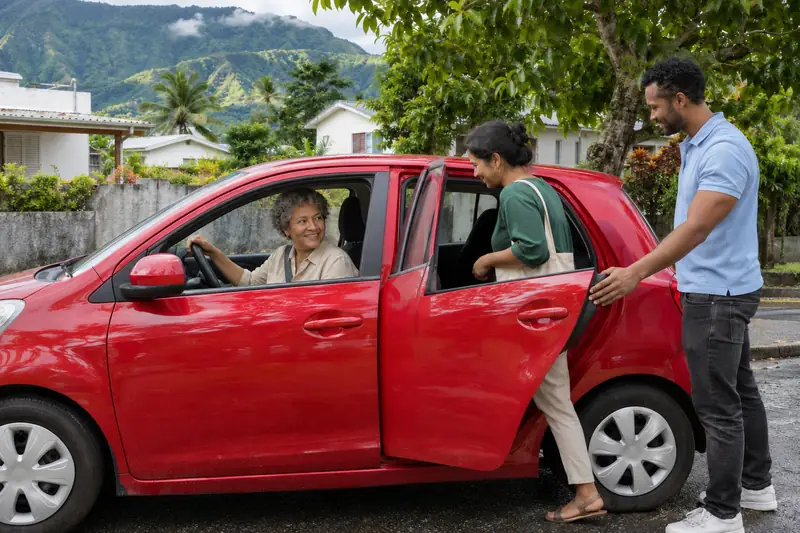
In Toulouse, car sharing between individuals means that a private owner lends a car to another person for a fee, through a platform that manages the booking or through a direct agreement. It allows owners to recover part of the cost of insurance and parking, and it gives students, workers and visitors a car for a few hours or days. In the pink city, where the metro and bicycles handle many trips, it covers excursions to the Pyrenees, the canals and the countryside.
A city of students, engineers and weekend drivers
Toulouse has a large student population and a strong aerospace sector, so many residents are young, mobile and not always attached to owning a car. The metro, the tram, the bus network and the bicycle scheme serve the centre and the main districts well.
Outside working hours, though, people want to leave: to the Pyrenees for skiing or hiking, to the Canal du Midi, to Albi, Carcassonne or the Atlantic coast. Public transport serves some of these places but not all, and a car makes the trip simpler.
Owners who use their car mostly for commuting can lend it at weekends and during holidays, and so earn a small income. Newcomers who have just arrived for a job find in private sharing a flexible way to explore the region before deciding whether to buy.
The main ways to share in Toulouse
Three approaches exist side by side. A platform lists private cars, collects payment and adds cover for the duration of the rental. A car club owns vehicles stationed in the city and lets subscribers book them. A direct agreement between neighbours, friends or colleagues has no intermediary.
- With a platform, the contract and claims process are standardised.
- With a club, there is little paperwork once you subscribe.
- With a direct agreement, you save the fee but you manage everything yourself.
Look at the cost of each approach in the situation you expect. A person who borrows twice a year does not need a subscription, while a household that needs a car every weekend may find that a regular agreement is cheaper.
Car sharing between individuals in Toulouse and insurance
The first step for an owner is to ask the insurer how the policy treats a loan. Some contracts only cover named drivers, some exclude paid use, and others accept it with a specific option. Obtain the answer in writing and keep it with the vehicle documents.
During a platform booking, a separate policy normally applies. It specifies the excess, the exclusions and the time within which a claim must be declared. The borrower should read the terms and check that the licence meets the conditions, including age and years of driving experience.
After any incident, both sides should take photographs, exchange information and declare the accident quickly through the platform. A clear and prompt report makes the settlement faster and reduces the chance of a disagreement.
Roads, parking and local conditions
The ring road around Toulouse is busy at rush hours, and the access roads to the airport and the aerospace sites can be congested. Borrowers should plan their journey with an alternative route and avoid leaving at peak times when they have a train or a flight to catch.
Parking in the centre is paid and often full. Many owners park in a residential space or in an underground car park, and they should explain how to enter and leave. Some districts have restrictions on large vehicles or require a resident's permit, which the owner should clarify.
In summer, temperatures can be high and the car can become very hot. Remind borrowers not to leave children, animals or sensitive items inside, and to check the air conditioning before a long trip.
Trips to the mountains and the countryside
The Pyrenees are about two hours away, and many borrowers head there in winter. Mountain regulations require winter equipment on many roads at certain times of the year, so ask whether the car has winter tyres or chains. An owner may prefer to refuse a mountain trip without the right equipment.
Other popular destinations include the Canal du Midi, the medieval towns of Cordes-sur-Ciel and Albi and the vineyards around Gaillac. For these trips, the main questions are the mileage allowance and fuel, so check them in advance.
- Fill the tank before returning.
- Take a note of the starting mileage.
- Keep receipts for tolls and fuel.
On narrow roads, drive carefully, and remember that in some villages parking is limited at market times.
What it costs and what it earns
A fair price covers the real costs of the vehicle. Add up insurance, servicing, tyres, depreciation and parking, divide by the number of days of lending and include a modest margin. A kilometre allowance and a deposit protect the owner.
Borrowers should add fuel, tolls and the platform fee and compare the total with a short rental from an agency or with a train ticket for the destination. The comparison often favours the shared car for a weekend and not for a long trip, where an agency may offer unlimited kilometres.
For owners, the income is an extra rather than a salary. It depends on the season, the model and the quality of the listing, and it should be compared with the time spent managing requests, cleaning the car and handling handovers.
Handover, return and records
At pick-up, inspect the car together, take dated photographs and note the mileage and the fuel level. Explain any special feature, such as a heavy clutch or an unusual handbrake. At return, repeat the inspection and compare the pictures.
Owners should keep a record of each loan, including the price, the platform fee and the costs, and save the messages and the contract. Income from lending a car should be recorded and, depending on the amount and the regularity of the activity, may have to be declared, so rely on official guidance or an adviser.
Good communication prevents most problems. A message the day before, a clear meeting point and a prompt answer to any question make the experience pleasant, and reliable users attract positive reviews.
Students, newcomers and professionals
Toulouse welcomes thousands of students, interns and professionals each year, many of whom arrive from abroad. For them, the first months are a period of discovery, and a private loan is a flexible way to visit the region without committing to a purchase.
Some employers in the aerospace and research sectors have sites outside the centre, where public transport is less frequent. Colleagues sometimes organise their own arrangement, with one person lending a car on a rota and the others sharing the costs. In that case, write a simple agreement about fuel, insurance and what happens in the event of an accident.
Newcomers should also learn the local rules, such as parking zones, the low-emission zone and the speed limits on the ring road, before they drive a borrowed car. A short briefing from the owner is worth the time.
Organisations offering shared cars in Toulouse
Further reading
- UFC-Que Choisir : Advice on rental contracts, insurance and consumer disputes.