
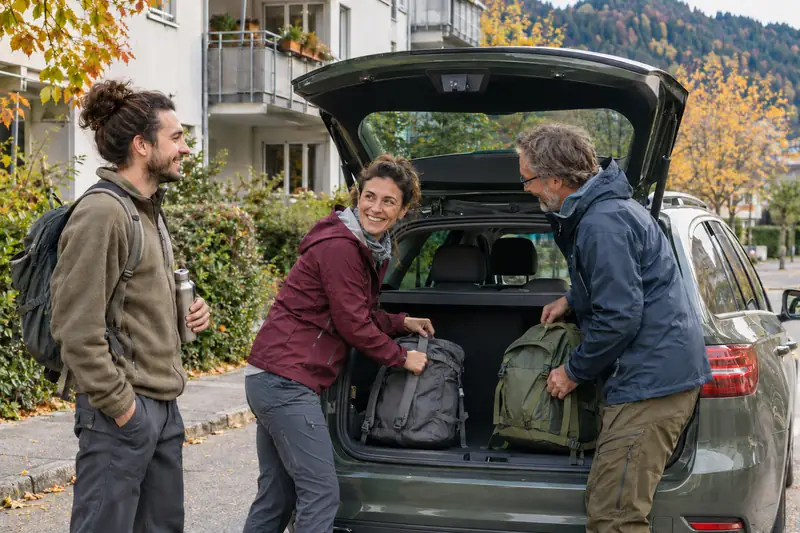
In Dijon, car sharing between individuals means that a private owner makes their car available to other people for a few hours or days, usually via an online platform, and receives a rental fee, while borrowers get a vehicle without buying one. It suits students, residents of the compact city centre and families who want a car mainly for trips to the vineyards or the Morvan. The platform normally manages booking, payment and insurance, and both sides agree on fuel, cleanliness and the time of return.
Why borrowing a neighbour's car makes sense in Dijon
Dijon is a medium-sized city with a compact historic centre, two tram lines, a dense bus network and many cycle paths. Daily life without a car is realistic for many residents, especially students at the university and workers in the centre. Yet the region around the city, with the Côte de Nuits wine road, Beaune and the Morvan forests, calls for a car.
- Residents without a car borrow one for weekends.
- Owners cover part of their annual costs when the car stays parked during the week.
- Visitors arriving by train can pick up a car near the station.
The balance between a strong public transport network and a countryside that is hard to reach without a vehicle explains the appeal of occasional rentals between neighbours.
Car sharing between individuals in Dijon: platforms and networks
National peer-to-peer platforms list cars in the Dijon area and manage bookings, payment, identity checks and insurance for each rental. Their offer is more limited than in the largest French cities, so booking a few days ahead for weekends and holidays is wise. Local initiatives, university groups and neighbourhood networks complement them, especially for informal lending among acquaintances.
To compare platforms, consider the commission, the insurance conditions, the number of cars near your address and the level of support. Read reviews from other users and confirm that licences are checked. If you lend your car outside a platform, write down the dates, price, fuel arrangement and responsibility for fines, and check your insurance contract to make sure it allows the loan. Prompt replies to messages are valued in smaller markets.
Insurance and responsibility
A rental between individuals involves several points that must be clear. The platform's policy usually applies during the rental, covering the car and the driver, with a deductible paid by the borrower in case of damage. The owner's personal insurer should be told about the activity, since some contracts exclude rental to third parties.
- The borrower must meet the minimum age and licence seniority.
- Documents stay in the car throughout the rental.
- Fines are transferred to the driver at the time of the offence.
If the income from rentals becomes regular and substantial, it must be declared for tax purposes. A tax adviser or the official website of the tax administration can explain how. Knowing the rules beforehand removes much of the stress that sometimes surrounds lending a car, and it lets both sides concentrate on a pleasant, uncomplicated exchange.
Parking, traffic and the city centre
The centre of Dijon has pedestrian streets and regulated parking, with paid zones and residents' permits. Owners should explain precisely where the car is usually parked and how to exit the area, including any barriers or garage access. The tram works and streets that are closed for events or markets can change the route, so borrowers should check traffic information before leaving.
The ring road and the motorways towards Paris, Lyon and Besançon are busy at rush hour and on weekends of departure. Winter mornings can bring frost and fog, and the plains around the city are exposed to wind. Cars should have good tyres and working lights. Borrowers who are not used to the city should allow time to find parking at their destination and avoid driving into restricted zones.
Prices and how to compare
Rates depend on the type of car, the season and the duration. Prices are usually lower than in the capital, and long weekends or summer holidays raise demand. Owners decide their own tariff within platform limits, and borrowers should compare several listings.
- Compare with traditional agencies at the station and in the suburbs.
- Check mileage limits and the cost of extra kilometres.
- Include fuel or electric charging and any motorway tolls.
For quick errands in town, tram and bicycle remain cheaper. For a day among the vines or a trip to a lake, a borrowed car shared by several people offers excellent value. Owners should include maintenance and depreciation when calculating whether renting out their car is worthwhile.
Day trips by borrowed car around Dijon
Burgundy offers many destinations for a car journey. The Route des Grands Crus runs south from Dijon through Gevrey-Chambertin and Nuits-Saint-Georges, towards Beaune. To the west lie the Abbey of Fontenay and the Morvan regional park, with forests and lakes. To the north, the sources of the Seine and the hills of the Châtillonnais offer quieter landscapes.
- Plan the driver for any wine tasting; the legal alcohol limit is low.
- Book restaurants in advance at weekends in the high season.
- Check opening hours of abbeys and museums, which vary by season.
Sharing the cost among friends makes these outings affordable, and a borrowed car avoids the need to own one just for occasional excursions.
Handing over and returning the car
Meet the owner at the agreed place or use the keyless system provided by the platform. Walk around the car, noting scratches and marks, and take photographs. Check the dashboard for mileage and fuel level, and test lights and indicators.
When returning the car, keep the same fuel level and leave the interior clean. Park in the agreed spot, lock the car and confirm in the app. If you notice a problem, report it immediately with pictures. Courtesy and punctuality strengthen your reputation and make it easier for you to book again. In a mid-sized city such as Dijon, the same owners and borrowers often meet several times, so a good relationship is valuable.
Protecting yourself from fraud
Stay within the platform for messages and payments. Be suspicious of requests for a bank transfer outside the system, of listings with no reviews that are far cheaper than others, or of owners who cannot show registration papers. Check the number plate against the listing.
Owners should never hand their keys to someone whose identity has not been verified, and should remove personal belongings from the car. After an accident, ensure everyone's safety, call emergency services if needed, fill in a joint accident report and inform the platform and the insurer without delay. Keeping messages, photographs and receipts in one place makes it much easier to settle any dispute quickly and fairly.
Car sharing and mobility services around Dijon
- Getaround : Platform where individuals rent out their cars and borrowers book them with a phone.
- Divia Mobilités : Operator of Dijon's tram and bus network, useful alongside occasional car use.
- Mobigo : Regional transport brand for Burgundy-Franche-Comté covering trains and coaches beyond the city.
Further reading
- Ville de Dijon : City website with information on parking, traffic and local mobility.