
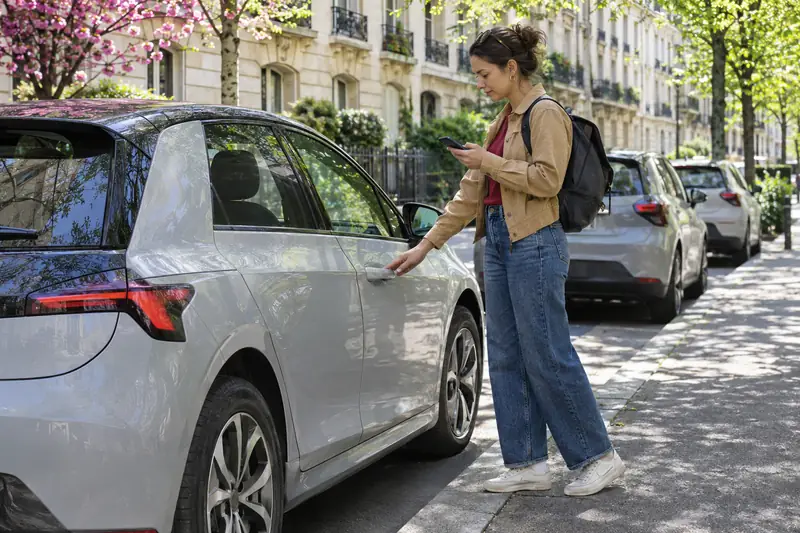
In Paris, a monthly car subscription is a car rental paid month by month, with insurance and a mileage allowance included in a fixed fee. Few capital cities have a better public network, so most residents of the centre do without a car, yet suburban commutes, family trips and relocation periods keep demand alive. A subscription offers a vehicle without purchase, a private parking space or resale, and the car goes back at the end of the term after notice.
A capital where owning a car is often a burden
Inside the périphérique, a private car spends most of its life parked. Street spaces are paid, residents' passes cost a yearly sum, and underground car parks can charge more per month than a small flat in a provincial town. Traffic is slow, bus lanes and cycle lanes take up road space, and the speed limit on many streets is thirty kilometres an hour.
For that reason, many Parisians sell their car, or never buy one. A monthly rental appeals to a different crowd: people who live in the inner suburbs, who need a car only for a project or a posting, or who want to keep the option open without paying for a space every month of the year.
Metro, RER and the places they do not reach
The metro has sixteen lines, the RER crosses the region, and tram lines circle the city, while the Navigo pass makes travel simple within the Île-de-France. Vélib' bicycles and scooters are everywhere. Two major airports, Roissy-Charles de Gaulle and Orly, are connected to the centre by rail.
The gaps appear outside the main rail corridors. Business parks in Saclay or Marne-la-Vallée, the logistics zones near Gennevilliers or Roissy, hospitals on the periphery and the large shopping centres are often awkward to reach by public transport, especially at night. That is where a car is hard to replace.
What does a monthly car subscription in Paris cost?
Prices are higher than in most French cities because of demand and the cost of parking for the provider. They vary with the size of the car, the duration, the mileage and the neighbourhood from which you collect it. Do not rely on a single headline price, and ask for an itemised quote.
- Check how many kilometres are included and what each extra kilometre costs.
- Ask for the excess in case of damage, as scratches are frequent in dense areas.
- Confirm whether delivery to your address is possible.
- Ask about fees for a second driver and for drivers under twenty-five.
A longer commitment lowers the monthly rate, but only choose it if your plan is firm.
Low-emission zones around and inside the city
Paris and the inner suburbs belong to a wide low-emission zone, governed by the Crit'Air sticker system, and the rules have been tightened in stages. The zone covers the area inside the A86 ring road, with variations from one municipality to another. A recent petrol, hybrid or electric car faces fewer problems than an old diesel.
Ask the provider which sticker the exact vehicle has and whether the car will remain allowed throughout your rental. Be careful with temporary traffic measures during pollution peaks, which can restrict even recent cars in some situations.
Parking, tolls and the practical cost of driving
The biggest hidden cost is parking. If you rent a car for the month, work out where it will spend the night. A garage space inside Paris can cost a lot, whereas one in a suburb served by RER may be cheaper. Some people park near a RER terminus and ride the train for the last stretch.
Remember also the tolls on motorways such as the A1, A6 or A13, fuel prices that tend to be high near the centre, and the fines that arrive by post if you forget to pay for street parking. Fines go to the rental company first, which will bill you with a handling fee.
Who rents by the month in the Paris region
The profile is varied. Expatriates arriving on a posting often prefer to rent before they know where they will live, and students on internships in the outer ring need transport. Families waiting for a vehicle delivery use a rental to bridge the gap. Freelancers who visit clients across the region sometimes use one only for a busy quarter.
Foreign licences are a frequent question. Depending on the country of issue, you may need an official translation or an international permit, and the period during which you can use the licence after becoming resident is limited. Ask the provider and the prefecture what applies to your case.
Car sharing, scooters and trains as alternatives
Several operators run car-sharing in Paris, either with cars parked in dedicated bays or with vehicles owned by individuals and shared through an app. These work for an occasional errand but become expensive with frequent use. High-speed trains reach Lyon, Lille, Bordeaux or Strasbourg quickly and often cost less than driving once fuel and tolls are counted.
The monthly rental fits somewhere in between: regular use, a few times a week, over several months, from an address with a place to park. If your journeys are fewer than four a month, test a short rental first.
Returning the car in a busy region
Choose a return place that you can reach without crossing the city at peak hour. Allow extra time for traffic on the périphérique, and arrive with the car clean and the tank full if required. Remove the toll badge you borrowed, if any, and any parking card.
Walk around the car with the agent and photograph it in good light. Keep the signed report and the final bill until you see the deposit released.
Agencies near the main stations can be crowded on Friday evenings and Sunday evenings, so choose a quieter weekday if you can. If you have borrowed a child seat, a roof box or a toll badge, return every item together with the car, and list them on the report so that nothing is billed later.
Weekend exits and the Île-de-France escape routes
The real pleasure of having a car in Paris is leaving it. Fontainebleau forest, the Vexin villages, the Loire castles and the Normandy coast lie within one to three hours. Departures on Friday evening and returns on Sunday evening are slow, particularly on the A6, the A13 and the A10, so start early or late to avoid the worst of it.
Check that your contract allows trips abroad, for example to Belgium or Luxembourg, and note that some low-emission zones in other countries require their own registration. Plan fuel stops outside the busiest motorway service areas, where prices are often higher.
Rental and car-sharing services to compare in Paris
- Drivalia : Offers subscription-style car rental in France, with pick-up options in the Paris region to check.
- Ubeeqo : A car-sharing and rental service of the Europcar group, active in Paris and its suburbs.
- Getaround : A platform where individuals and professionals rent out cars by the hour, day or longer.
- ADA : Rents cars and vans by the day or the month through many agencies in Île-de-France.
- Europcar France : Provides cars for days, weeks or months, with branches at stations and airports.
Further reading
- Île-de-France Mobilités : Maps, fares and passes for metro, RER, tram and bus in the Paris region.